A full Moon is easy to notice, but it is not always the easiest time to see rugged lunar relief. Near a quarter phase, the line dividing lunar day and night casts long shadows that make craters and hills stand out. This article explains how to plan a small comparison without promising the same view at every hour or latitude.
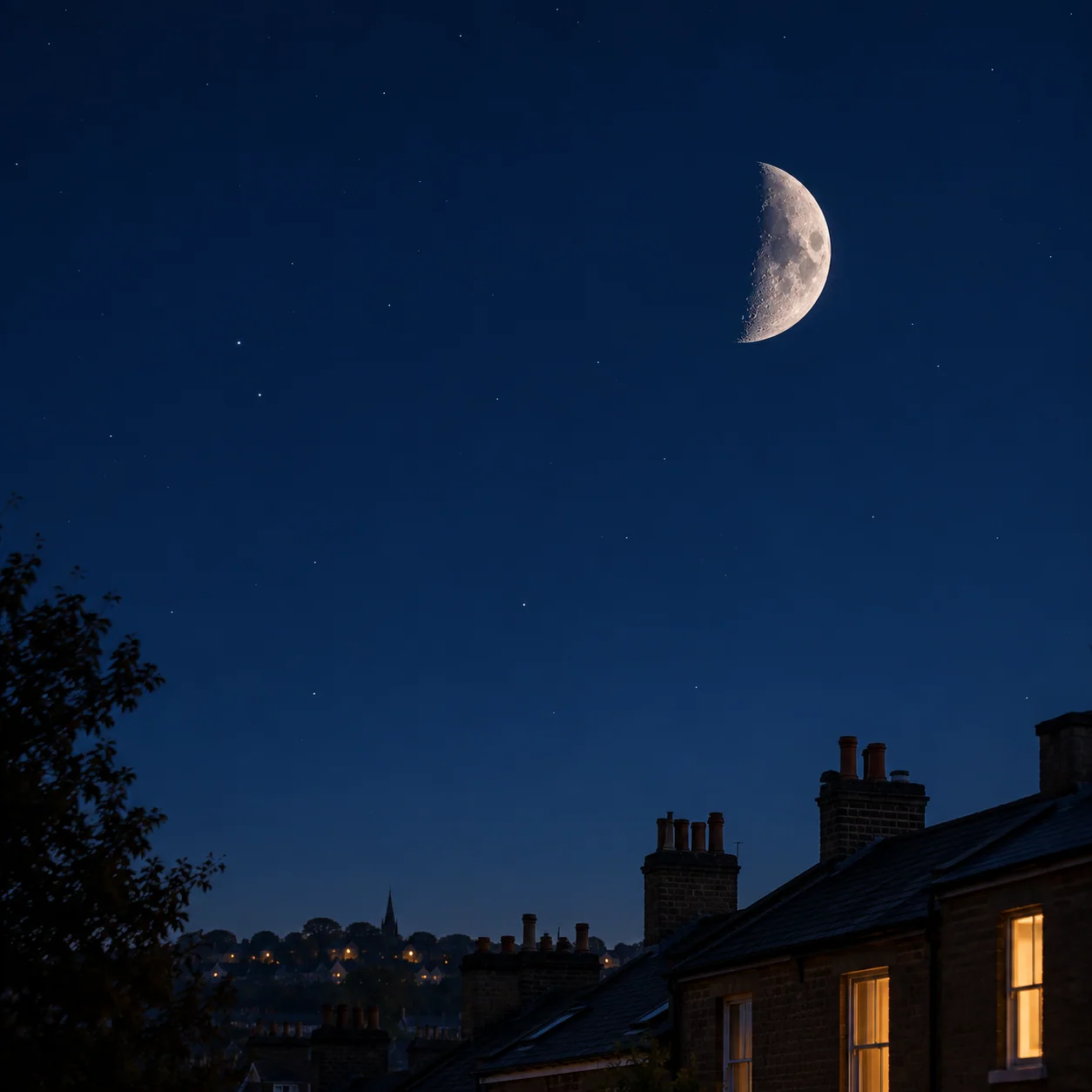
Follow the shadow, not a date on a calendar
Use a current local lunar phase guide to select an evening when the Moon is partly lit and above your horizon. The exact rise and set times change daily. A first-quarter Moon often suits evening observers; a last-quarter Moon is commonly better placed later at night or toward morning. Do not go out merely because a phase calendar says “quarter” if cloud, buildings or the Moon's low altitude make the view poor. Begin with the visible boundary between light and dark. That boundary is the terminator, and it shifts across the Moon as the lighting geometry changes.
What the long shadows reveal
Along the terminator, low-angle sunlight makes raised rims and mountains cast shadows. A crater may look like a bright edge beside a dark interior, while flatter regions appear broad and comparatively featureless. The effect is similar to relief on a landscape at sunrise or sunset. You do not need to identify a named crater to appreciate it. Describe one small region in your notebook: perhaps a chain of pits, a sharp bright rim or a dark oval. Return on another night and notice whether that patch looks different as the angle of illumination changes.
A three-view comparison
Look at the Moon first with unaided eyes, then with binoculars if you have them, then with a telescope only if one is available and familiar. The first view gives phase and orientation; the second reveals broad patterns; the third may resolve smaller relief. Write down what each instrument added rather than assuming the highest power “wins.” Hold binoculars steadily or sit down. If a telescope image looks reversed, mark the orientation as seen instead of forcing it to match a map. Different optics and atmospheric conditions can change how easy the comparison feels.
Why a full Moon looks different
Near full phase, the Sun illuminates the lunar face more directly from our perspective. Broad dark maria and bright highlands remain visible, but relief can look comparatively flat because shadows are shorter. That is not a failure of the telescope. It is another lighting condition, suited to a different question: which large patterns cover the disk? To test the distinction, draw the same general region at quarter and full phases, recording the date and time. Avoid comparing a smartphone photograph with a direct visual view as though they have identical contrast processing.
A realistic observing limit
Thin cloud, low altitude and warm air rising from rooftops can blur small details. A faint edge may be atmospheric rather than geological. If you struggle to find a named feature, step back to a broader light-dark pattern and use a current Moon map with matching orientation. The Moon is safe to observe at night with ordinary optics, but the Sun is not. Never sweep binoculars or a telescope near the Sun to locate a daytime Moon. Plan a night or twilight session with the Sun below the horizon if you are unfamiliar with safe optical pointing.
A small lunar-relief experiment
Select one obvious feature near the bright-dark boundary and describe it without a name: “light rim, dark interior, bright point just beyond.” Sketch only its relative position in the larger disk. On a later clear evening, look for the same region using a current Moon map and note whether the interior shadow has changed. If you cannot locate precisely the same crater, compare the overall texture of the terminator instead. A changed view can come from different illumination, seeing conditions, optical power or image orientation. State those possibilities before writing a dramatic conclusion. Try an unaided-eye phase drawing alongside the magnified detail so you can reconstruct which part of the disk you inspected. This little exercise is more dependable than a list of famous crater names memorized from a photograph. It also gives the reader a realistic success condition: one observed lighting difference, not a complete tour of lunar geology.
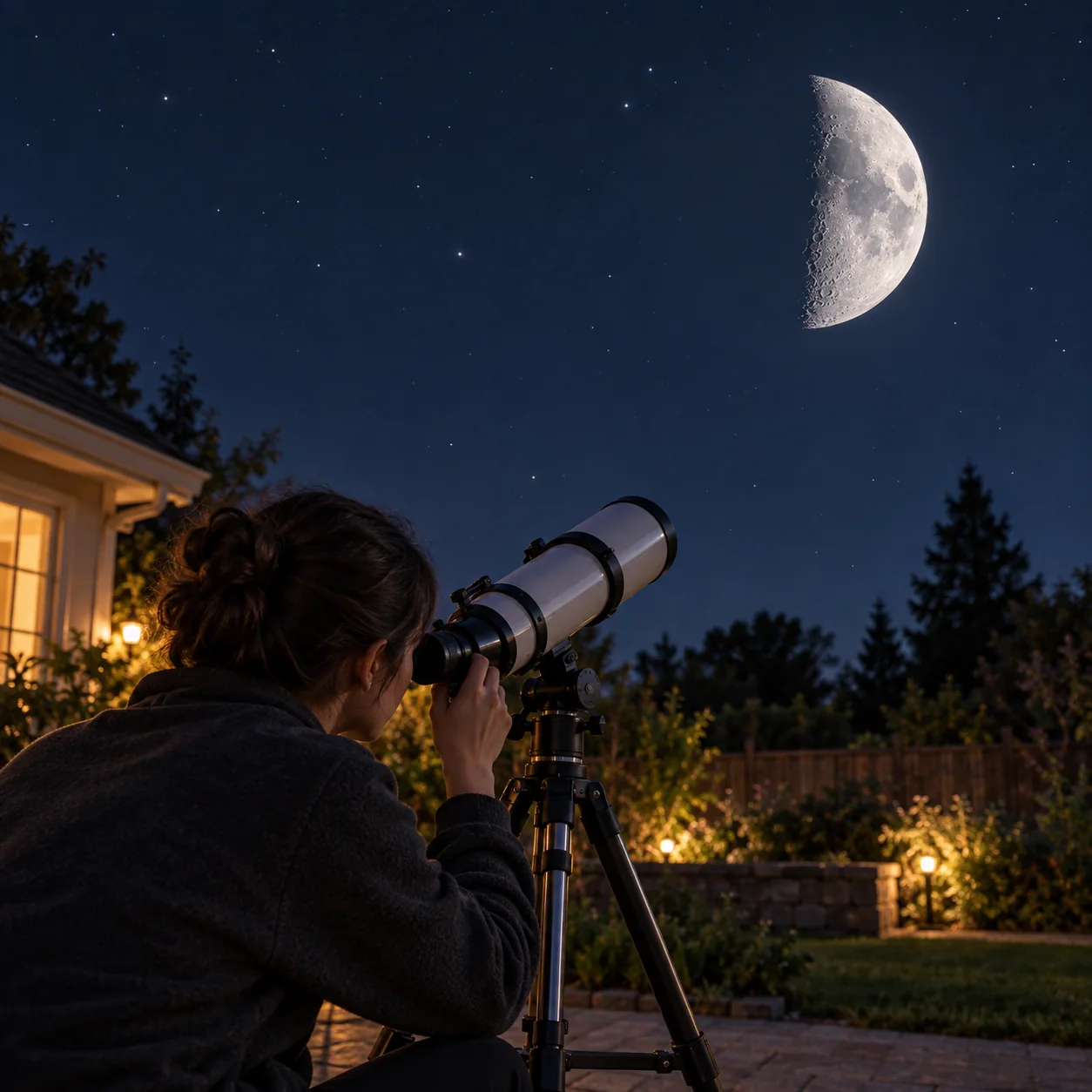
Treat the terminator as a moving natural experiment. The best phase is the one that answers the particular question you brought outdoors. When you revisit the terminator, use the same broad area on a lunar map but do not expect the lighting to reproduce an exact previous silhouette. Lunar phase, libration, atmospheric steadiness and optical orientation can differ. These variations are reasons to annotate the sketch, not reasons to label the earlier observation incorrect.