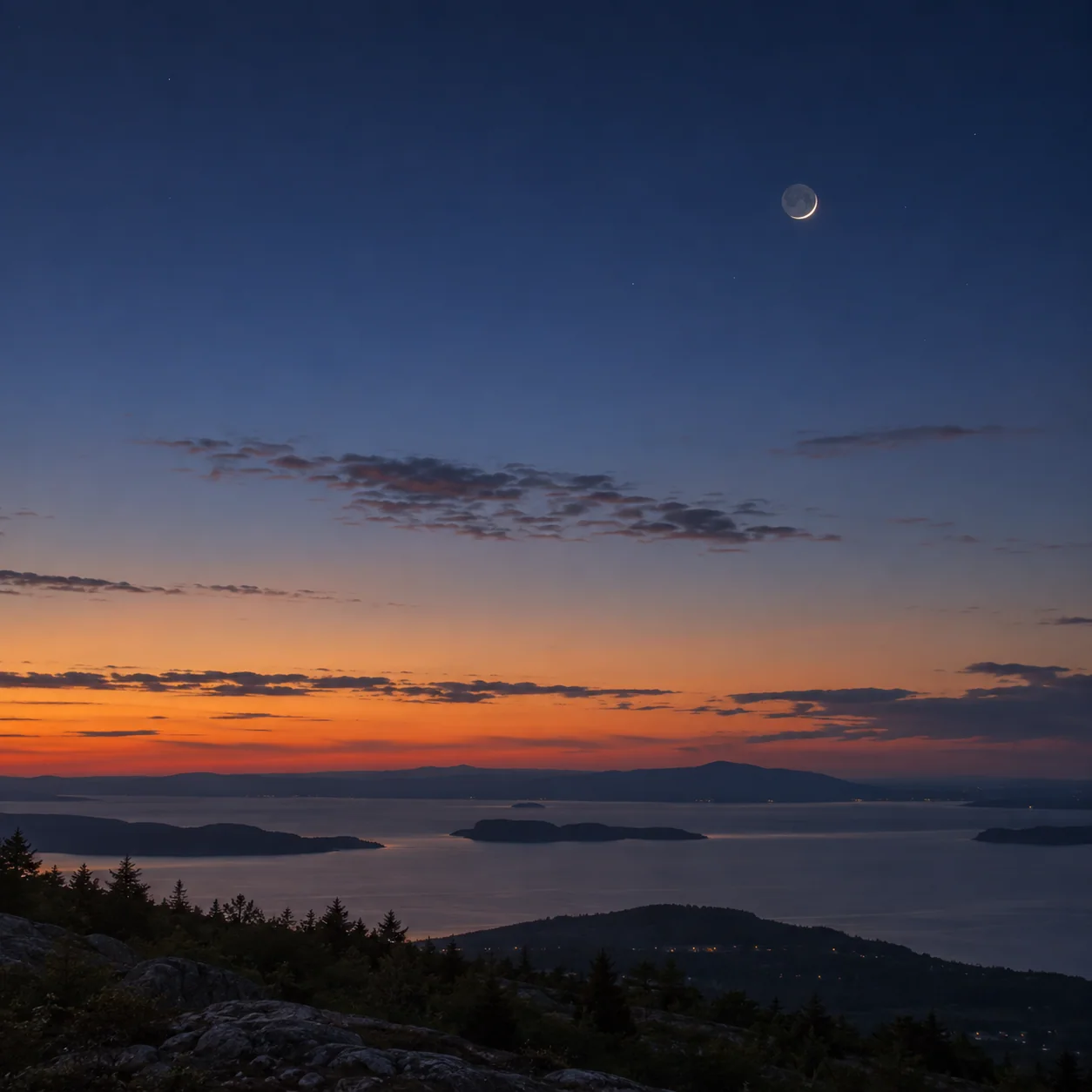
A thin crescent can seem to contain a second, ghostly Moon. The faint light on its otherwise dark side is earthshine: sunlight reflected by Earth and then by the lunar surface toward us. It is a subtle visual effect, not a sign that the unlit side is generating light. A clear horizon and realistic expectations matter more than a powerful instrument.
Choose the right part of the month
Use a current lunar phase calendar to find a slim crescent. A young waxing crescent is commonly sought after sunset in the western sky, while an old waning crescent is often a predawn target in the east. Exact timing and height depend on location and season; a phase symbol alone is not enough. Check the Moon's altitude for your city and pick an unobstructed, safe place. Avoid a horizon hidden by buildings or trees. Do not seek a daytime crescent through binoculars, because accidentally sweeping across the Sun can cause severe eye injury.
Separate the bright arc from the faint disk
At twilight, locate the bright crescent with your eyes first. As the sky darkens, look for a gentle gray outline completing the rest of the lunar disk. Some evenings it will be easier than others because haze, moonlight geometry and local glare vary. You do not need to stare continuously. Look away, let your eyes relax, and check again. A phone camera may apply night processing that exaggerates the faint disk; judge the result through direct observation if you are writing about what the eye sees.
What causes the glow
The sunlit portion of Earth reflects light toward the Moon, and some of that light returns to an observer on Earth after reflecting off the Moon. NASA's moon-phase explanation notes that when our Moon is a slender crescent, Earth as seen from the Moon is comparatively bright. The principle is a useful reminder that phase is about viewing geometry, not changing lunar shape. You need not calculate exact angles to enjoy the effect. On a sketch, show the bright arc with a firm line and the earthshine side with a faint wash.
Make a two-evening test
Observe on one clear evening and again when the crescent has grown thicker, keeping roughly the same local viewing conditions if possible. Write the time, sky brightness, haze and how easily you saw the dark disk. A thicker crescent is brighter and can make the low-contrast earthshine harder to notice. If clouds intervene, postpone rather than treating the comparison as decisive. Your notes may reveal that a dark foreground and a shielded streetlamp matter as much as the Moon's exact phase for your particular observing place.
Safety at the horizon
A crescent low in the sky tempts observers to move toward roads, water or an edge. Select the viewpoint in daylight and keep a clear route home. For young children, use a stable shared spot and point out the Moon before offering binoculars. Never use eclipse glasses as a supposed binocular filter, and never aim ordinary optics at the Sun. The safe beginner version of this activity is a twilight or night observation after the Sun is below your local horizon, not a close approach to sunset through magnifying glass.
How to label a faithful earthshine image
If you take a phone photograph, note that its night mode may combine exposures or lift shadows. The resulting dark-side glow can be more obvious in the image than it was to your eyes. Keep separate labels for “naked-eye impression,” “binocular impression,” and “camera result.” That distinction lets a reader learn from the difference instead of assuming their eyes are inadequate. An AI-generated crescent in an article is more distant still from documentary evidence: it is an illustration of the idea, not proof of a particular evening's sky. A simple pencil diagram of the crescent and faint disk can teach more if it comes from your observation. When the glow is absent, note whether the Moon was low, the sky was bright or haze was present. Do not strengthen the observation in retrospect just because the physics says earthshine exists. The valuable result is a credible report of what appeared to you.
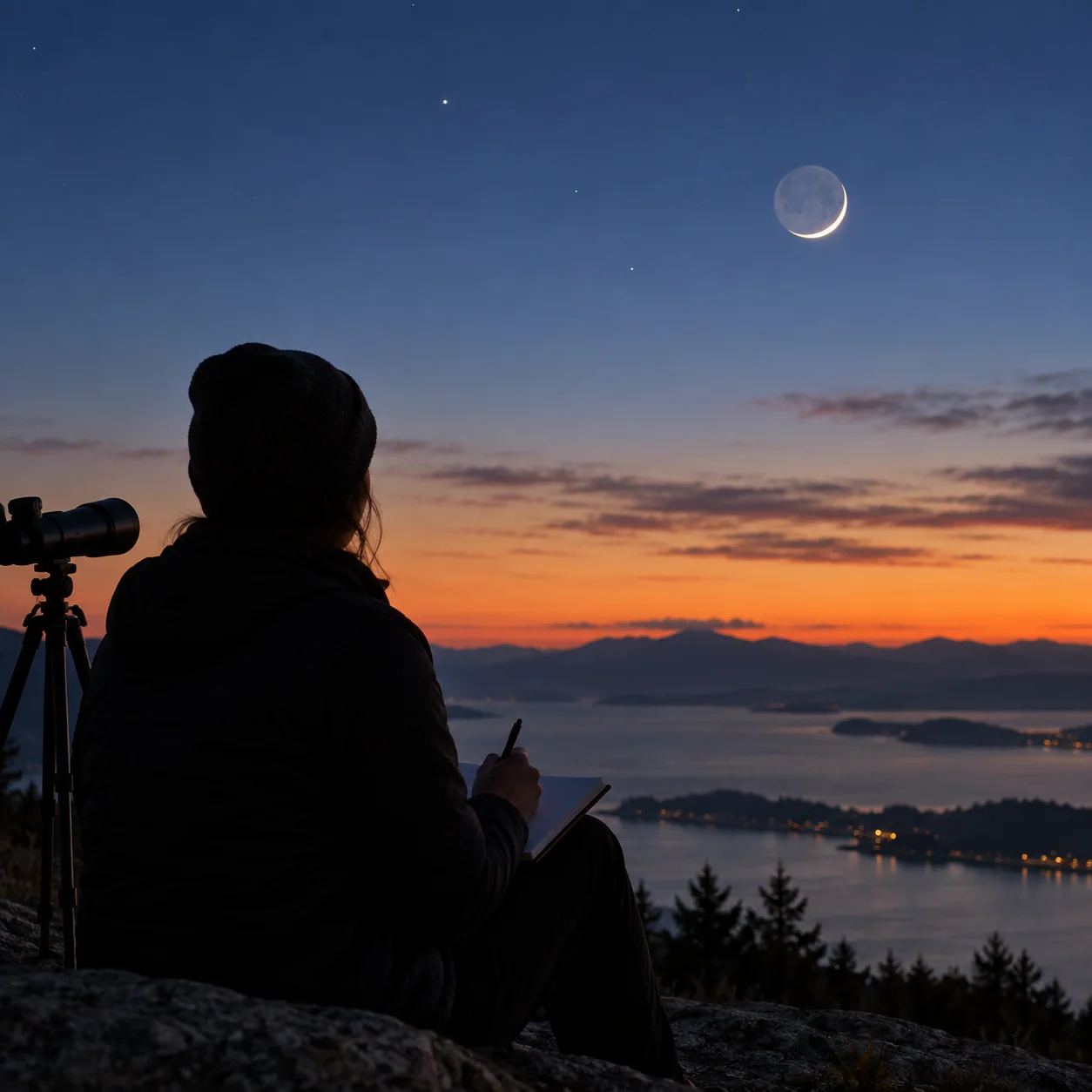
Earthshine rewards patient eyes. If you can describe a faint round disk beside a bright crescent, you have seen reflected light making a round trip through the Earth-Moon system. A very thin crescent can sit in a bright twilight sky while a thicker one stands against darker blue. That trade-off means the “best” earthshine attempt is not just the thinnest possible Moon. Try two safe evenings and report which gave your eyes a clearer faint disk, along with the sky brightness that accompanied each.
Continue observing
- Why a Half Moon Can Show More Relief Than a Full Moon
- Find the Pleiades: A Small Cluster With a Wide-Field Reward