Orion's Sword makes a good binocular field exercise in a suitable northern winter evening. This article is about the instrument view after Orion has already been identified by eye. If you still need the broad landmark, learn the Belt and Sword pattern first. Your binocular goal is to keep the Sword in a steady field and notice whether one area has a subdued glow.
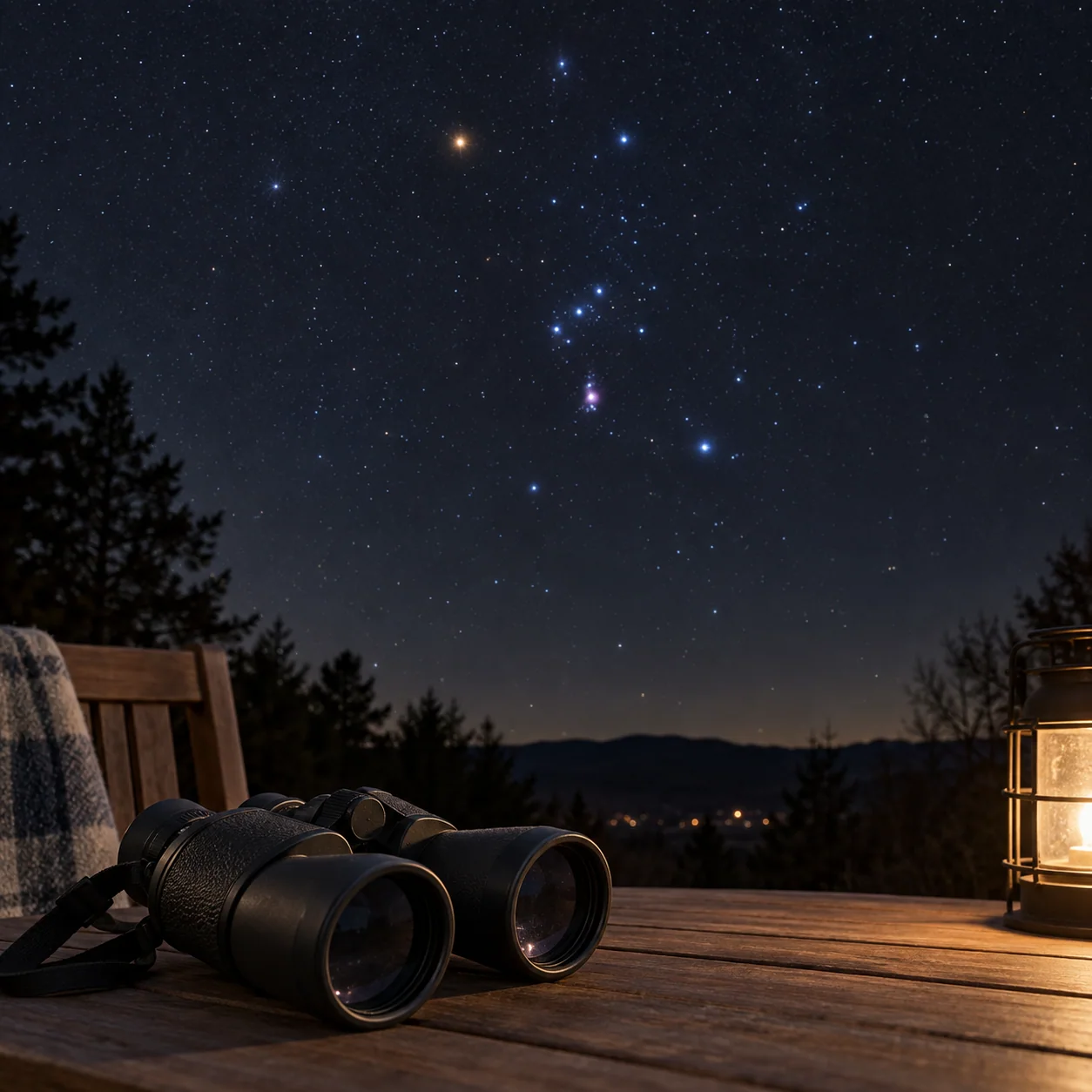
Check the season and choose the sky
Use a current chart for your latitude and observing hour. Orion is not an all-year evening fixture, and a low constellation behind rooftops will frustrate the exercise. A darker, clearer sky helps, but a suburban view can still teach aiming. Wait until the Sun has set and find the three Belt stars without binoculars. Identify the shorter Sword below the Belt using the actual pattern and chart orientation, which may be tilted relative to the page. If the Belt itself is not confirmed, do not start sweeping randomly with the instrument.
Raise the binoculars to a known point
Set a comfortable focus on the Moon or a bright star beforehand. With your eyes on the Sword region, bring the binoculars up without shifting your body position much. If you lose the field, lower them, look again with unaided eyes and repeat. Use a wide field rather than trying to magnify the region as much as possible. Brace your elbows or sit. Several modest, well-aimed looks are more productive than a long, shaky search through the wrong patch of sky.
A realistic view of M42
NASA places the Orion Nebula in the Sword. Through ordinary binoculars, the visual result may be a pale glow around or near the central stars, not a multicolored cloud. Compare it with a nearby point star: does one part of the field look softer or more extended? If moonlight, haze or city glare is strong, the difference may be weak. Record “possible glow” if you are uncertain. A generated article image can set atmosphere but must not be treated as a simulated eyepiece view with scientifically exact brightness.
Use a small field sketch
Draw the brightest Sword points in their rough relative positions and shade only the glow you can genuinely distinguish. Label which way the field moved when you nudged the binoculars, since handheld orientation can feel confusing. Include the printed magnification and aperture from your binoculars and a short sky note. The sketch gives you a basis for returning on a darker night. Do not redraw it after looking at an astrophotograph; photographs can alter your recollection of a marginal visual feature.
What a second session can answer
On a later clear night, repeat from the same location when the Moon is less intrusive, or from a safe darker site. Keep the same binoculars and compare the central patch. If the view improves, note both sky conditions and how steadily you held the instrument; you cannot isolate one factor without care. If it remains elusive, verify the Sword field with a current chart and try again rather than assuming something is wrong with the optics. The learning outcome is a reliable route from naked-eye landmark to binocular field.
A field-note comparison with Orion by eye
Sketch Orion's Belt and Sword without binoculars first, then draw a separate small circle for the binocular field around the Sword. The circles should not be the same scale. Note whether stars that looked merged or dim by eye separate in the instrument and whether the central region appears diffuse. If you see only crisp points, verify the field before claiming the nebula is absent; you may have aimed at the wrong portion. If the Sword is correct but the glow remains weak, record sky brightness and the Moon. A second night with improved transparency is a useful follow-up. Avoid tracing any colorful astrophotograph into the field note. A reader who understands the difference between a chart, an exposure and a visual observation will make a more confident observer than one trained to expect saturated clouds in every small binocular view.
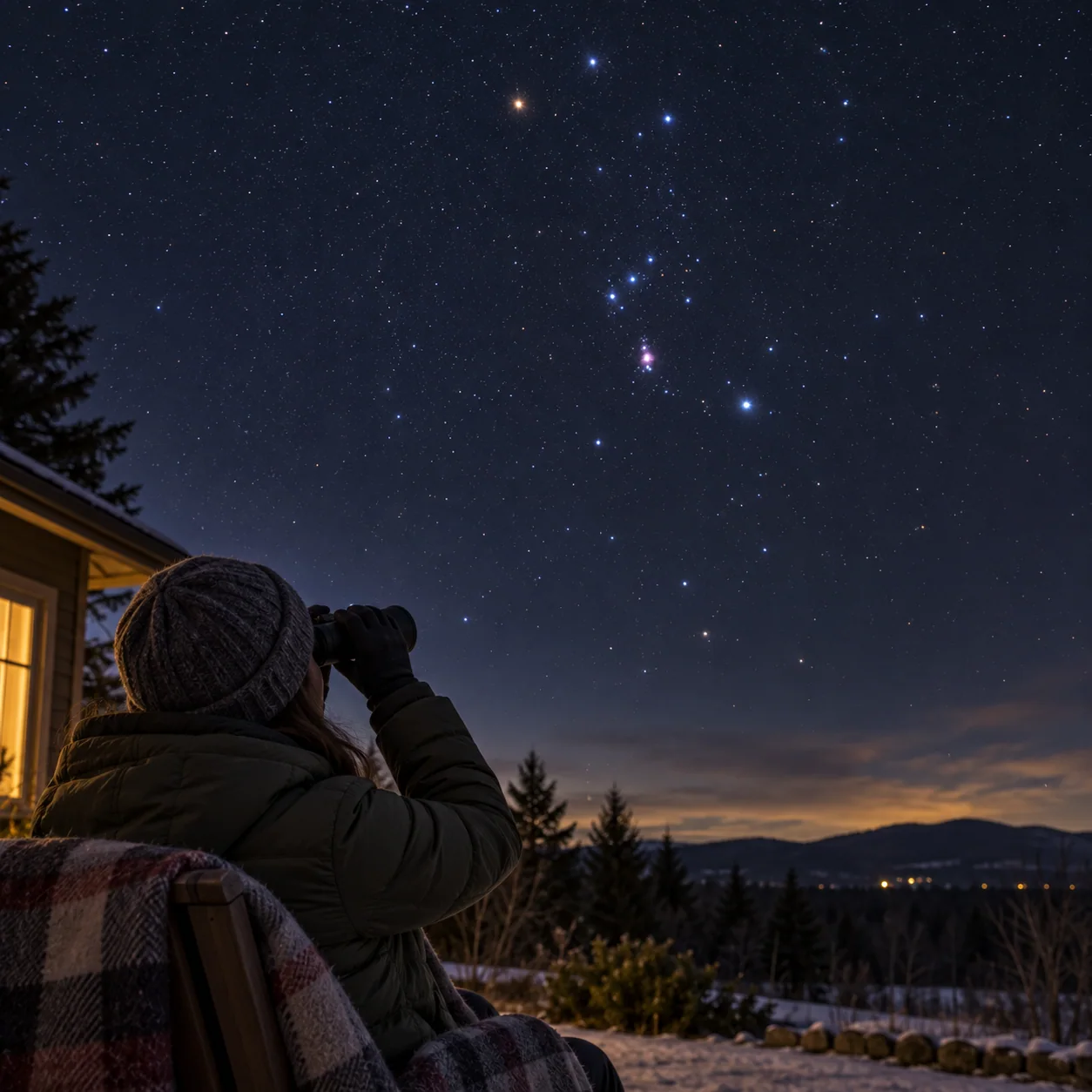
The Sword is a practical bridge between naked-eye orientation and binocular observing. A restrained gray glow is a success. A low-power binocular view preserves neighboring stars that help you identify the Sword. If you switch immediately to a narrow telescope field, you may gain scale but lose the route. Begin broad, then move to a different instrument only after you can return to the same patch deliberately. Write down that route in words you can repeat. The Sword can look quite different when the Moon is nearby, so write its phase or brightness beside any comparison sketch.
Continue observing
- 7x35 or 10x50 for Stargazing? Start With What You Can Hold
- Make a Stargazing Journal You Will Actually Use