A useful observation journal is a memory aid, not a decorative star diary. Astronomy rewards comparison: the same Moon under another phase, the same cluster from a darker place, or the same pair of binoculars with steadier support. If your notes can tell those sessions apart, they are doing their job.
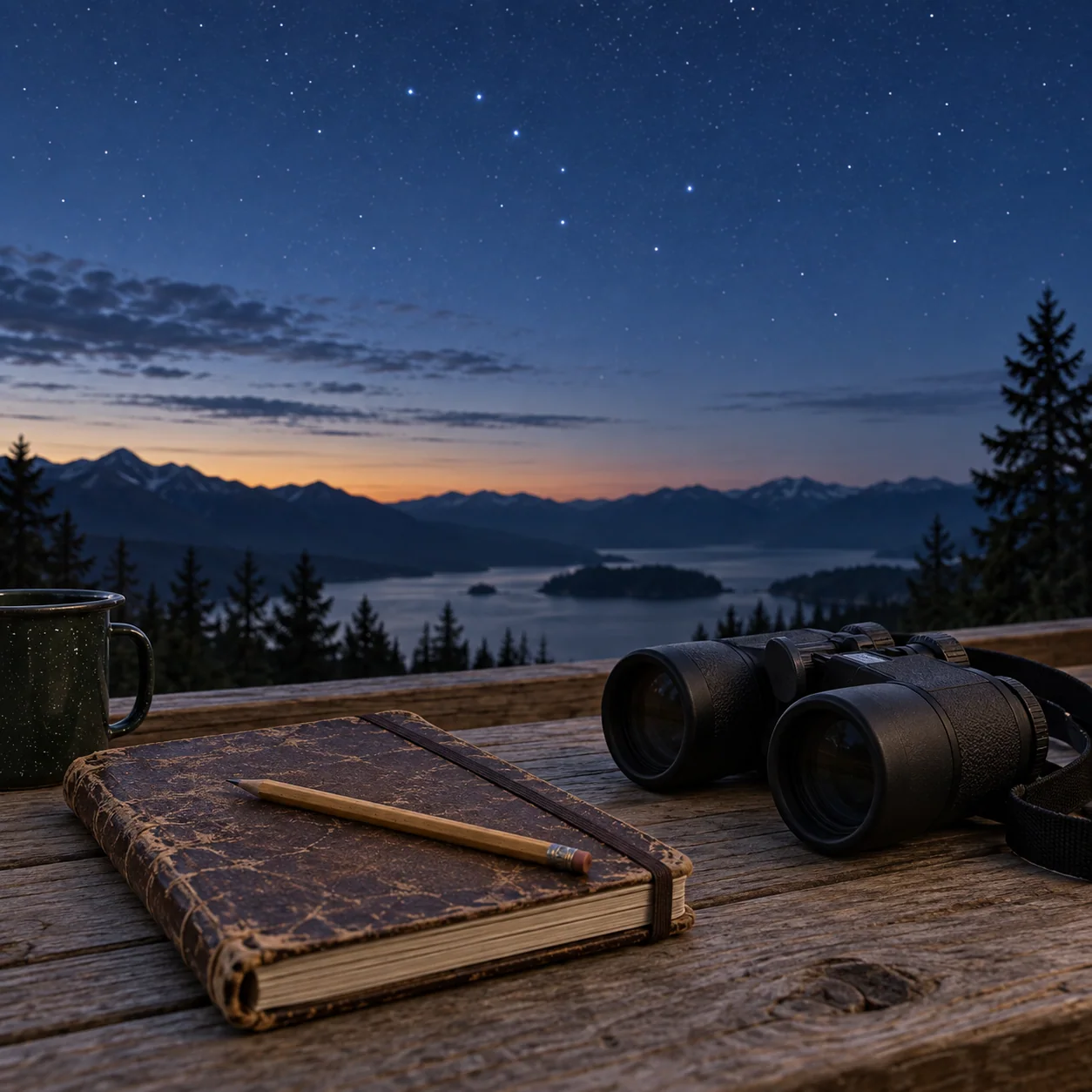
The five details that make a note reproducible
Write the local date and time, approximate location, sky conditions, target and instrument. “Clear” is less helpful than “thin cloud in the west, streetlamp behind me.” If you use binoculars, record the size printed on them; if you observe without equipment, say so. You need not publish exact coordinates or a home address. A city or general area is enough for personal comparison. Note whether the Moon was bright enough to affect fainter stars. These context details prevent you from blaming yourself for a difficult view.
Describe the view, not the catalogue entry
A photograph may show color and structure that the eye did not detect. Write “small gray haze beside three brighter stars” if that is what you saw; do not replace it with a description from a guide. Record uncertainty openly. “Possible second star at the edge of the field” can guide a later check. If you cannot find the target, draw the last anchor you recognized and the direction you searched. Failed searches often reveal whether the chart orientation or sky condition caused trouble.
A sketch can be very rough
Draw a circle for a binocular field or a rectangle for a naked-eye patch. Put the brightest points in first, then add relative positions and one distinctive feature. Mark which direction is up in the actual view if you know it; telescopes can invert or mirror images depending on their optics. The sketch does not need artistic accuracy. Its purpose is to preserve the pattern you saw before a guidebook image changes your memory. Use a dim task light and put the pen down whenever you need to check your footing.
Turn one page into a comparison
Return to the same target at another time or phase and place the second note opposite the first. Ask a narrow question: Is the lunar shadow boundary in the same place? Do more stars appear when the Moon is absent? Was the binocular view steadier while seated? A journal becomes useful when it supports this sort of answer. Do not compare two nights as if the only variable were the equipment when weather, light and target altitude differed. Write those differences down even when they complicate the story.
Keep the practice light
A session with only two sentences is valid. After a tiring day, write the target, conditions and one surprise. A simple repeatable format is more valuable than an elaborate template you abandon. If you share observations publicly, remove precise home-location data and photographs of other people unless you have permission. If a page contains an incorrect identification, correct it with a dated note rather than erasing the original. That preserves how your understanding changed and makes future comparisons more honest.
A page you can repeat next month
Use a small box at the top of a page for the practical facts: general location, date, local start time, cloud cover, visible Moon, instrument and target. Leave a larger blank area for the view. After ten minutes, add one sentence that begins with “I could distinguish” and another that begins with “I could not confirm.” Those two sentences force a useful boundary between seeing and expecting. A month later, return to the same target at a suitable hour and compare notes. If the newer view is better, look for changes in transparency, moonlight, steadiness or experience before crediting a different instrument. Keep original notes even when they contain a mistaken identification; add a dated correction below. This is a journal of learning, not a portfolio of perfect sightings. A modest page that records uncertainty honestly is often more valuable than a detailed drawing copied from an online sky atlas.
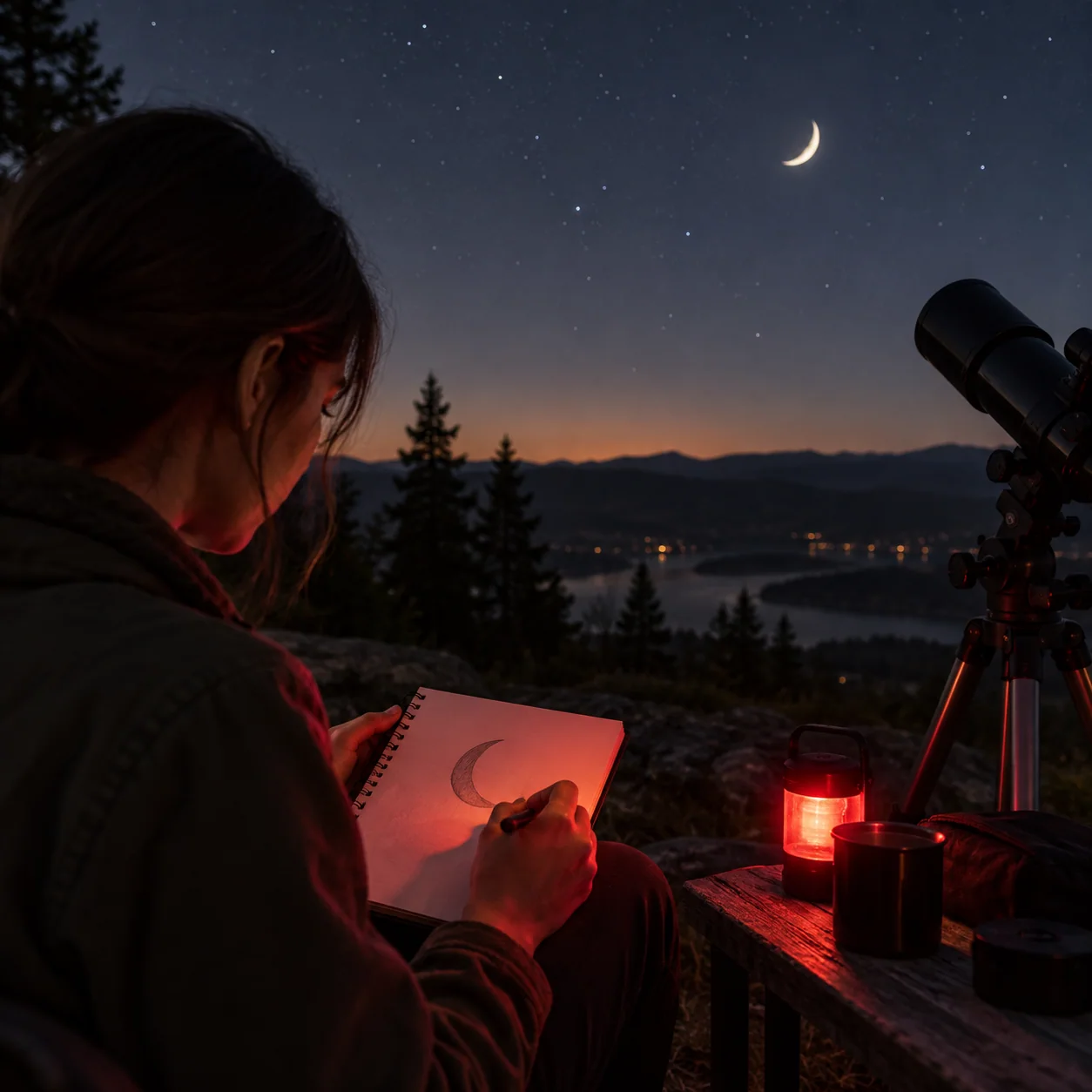
A journal is successful when it helps your next self recognize the sky and make one better decision about where or when to look. A simple index on the inside cover can make a growing notebook usable: list target names and page numbers rather than imposing an elaborate form on every page. You can then find earlier views quickly when a familiar phase or constellation returns. The record becomes a small personal atlas of conditions that actually worked for you.
Continue observing
- Your First Night of Stargazing: A Twenty-Minute Plan
- A Four-Night Moon Sketch: Follow the Moving Shadow Line