A binocular label such as 7x35 or 10x50 looks like a verdict about power, but it is only a starting description. The first number is magnification and the second is the objective-lens diameter in millimeters. A beginner needs a view they can aim, hold and revisit comfortably, not simply the largest numbers available. This is a comparison of use cases, not a hands-on review of any brand or model.
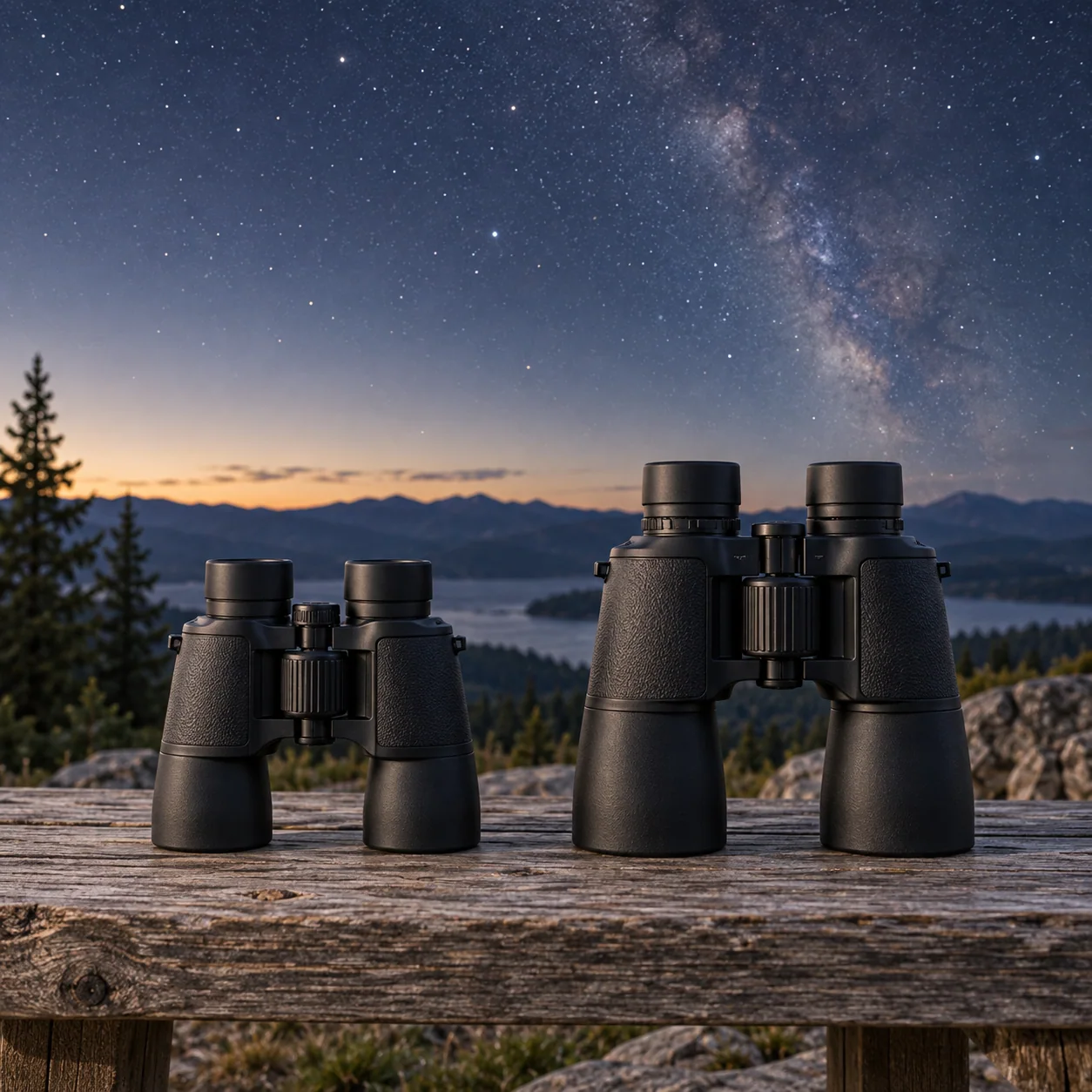
What the numbers mean in practice
A 7x35 instrument magnifies seven times with 35-millimeter objectives; a 10x50 magnifies ten times with 50-millimeter objectives. Larger objectives can gather more light, but the complete optical design, condition and your sky also matter. Extra magnification can make hand shake more conspicuous and often narrows the field of view. NASA's beginner binocular guide recommends trying common sizes around 7x35 through 10x50 and cautions that still larger pairs may be harder to hold steady. The right choice depends on your hands and observing plans.
Try the Moon and a cluster
A bright Moon gives an easy aim and focus test. Can you bring its edge into a crisp view without your arms tiring immediately? A broad star cluster such as the Pleiades tests framing: does the group fit comfortably inside the view with room around it? The two targets ask different questions. A larger objective may help under a darker sky, while a wider, lighter pair may be more pleasant for a quick backyard session. Do not claim one model is objectively better without specifying target, support and conditions.
Comfort before checkout
If possible, handle binoculars before buying. Check whether you can bring the eyepieces to your eyes comfortably, adjust the distance between barrels, and reach the focus wheel while standing or seated. Glasses wearers should inspect the eye-relief information and test the view if a real trial is available. Check the instrument's actual weight and how it balances during several minutes of use, not just a moment at a store counter. A tripod or stabilization adds cost and complexity; it may be appropriate later, not a mandatory first purchase.
A fair comparison method
If borrowing two pairs, use them on the same clear night from the same spot. Find the Moon, a bright star and one wide cluster, then score only what you personally observed: ease of finding, field comfort, steadiness, focus and fatigue. Note whether one pair was dirty or out of adjustment. Avoid equating a brighter city sky with a worse binocular. Do not present this exercise as laboratory measurement; it is a personal fit test. A useful editorial review would need declared test conditions and hands-on evidence.
The safety limit shared by every size
No ordinary astronomy binoculars should be aimed at the Sun. Eclipse glasses worn behind the eyepieces do not protect the viewer from concentrated sunlight. NASA requires a purpose-built filter securely attached to the front of each optical path for solar viewing, with expert advice. This guide deliberately concerns nighttime targets. Keep caps on while carrying equipment in daylight, and supervise children who may be tempted to scan the bright sky. If a solar event interests you, use an indirect projection method or a properly trained supervised setup instead.
A borrowed-pair decision card
Draw four headings: aim, stability, comfort and field. Give each borrowed pair a short note after viewing the same Moon or cluster from the same chair. For aim, ask how quickly you could locate the target; for stability, whether it stayed still long enough to inspect; for comfort, whether arms or eyes tired; for field, whether the group fit without repeated sweeping. You do not need a numerical score that suggests laboratory precision. A lighter pair may win the personal-use test even if a larger pair gathers more light. Check lens cleanliness and focus before attributing all differences to the printed numbers. If you later write product recommendations, disclose whether a model was actually handled, the site and the observing conditions. A buying guide built from specifications alone should be labeled as a specification comparison rather than a hands-on evaluation.
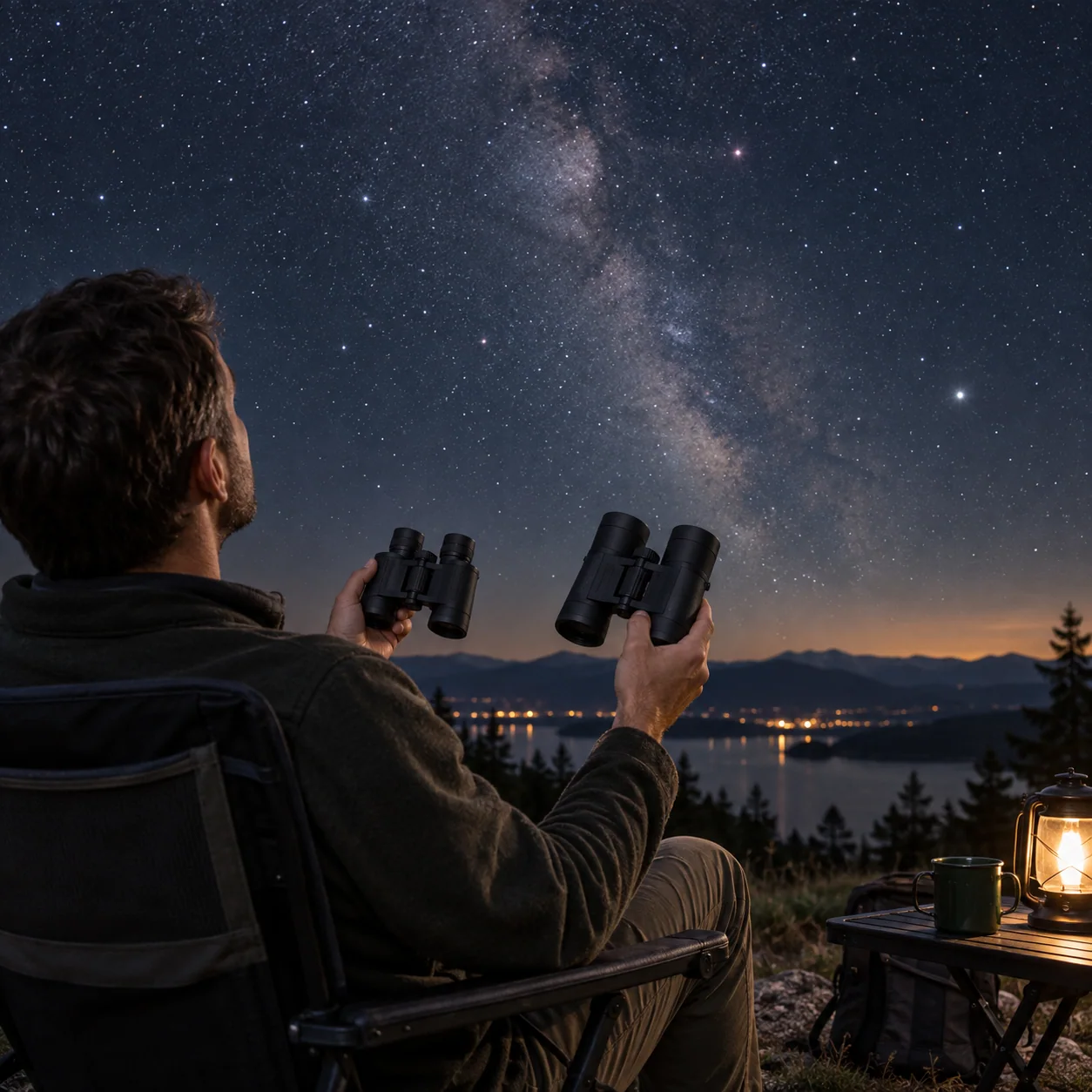
The best first pair is the one you can use accurately and comfortably. Its numbers matter less than the views you can hold still. A purchase decision also includes storage and transport. A larger pair that is left at home because it is uncomfortable will show less sky than a smaller pair that comes outside regularly. Check the carrying case, strap, eyecups and weather resistance for your actual use, while avoiding unsupported claims that a particular untested model excels.