A star that looks like a soft cotton ball through binoculars may be out of focus rather than a fuzzy celestial object. Focus both eyes methodically before judging the sky. Most center-focus binoculars have a main focus wheel and a separate diopter adjustment for one eyepiece; check the manual for your actual model because control placement varies.
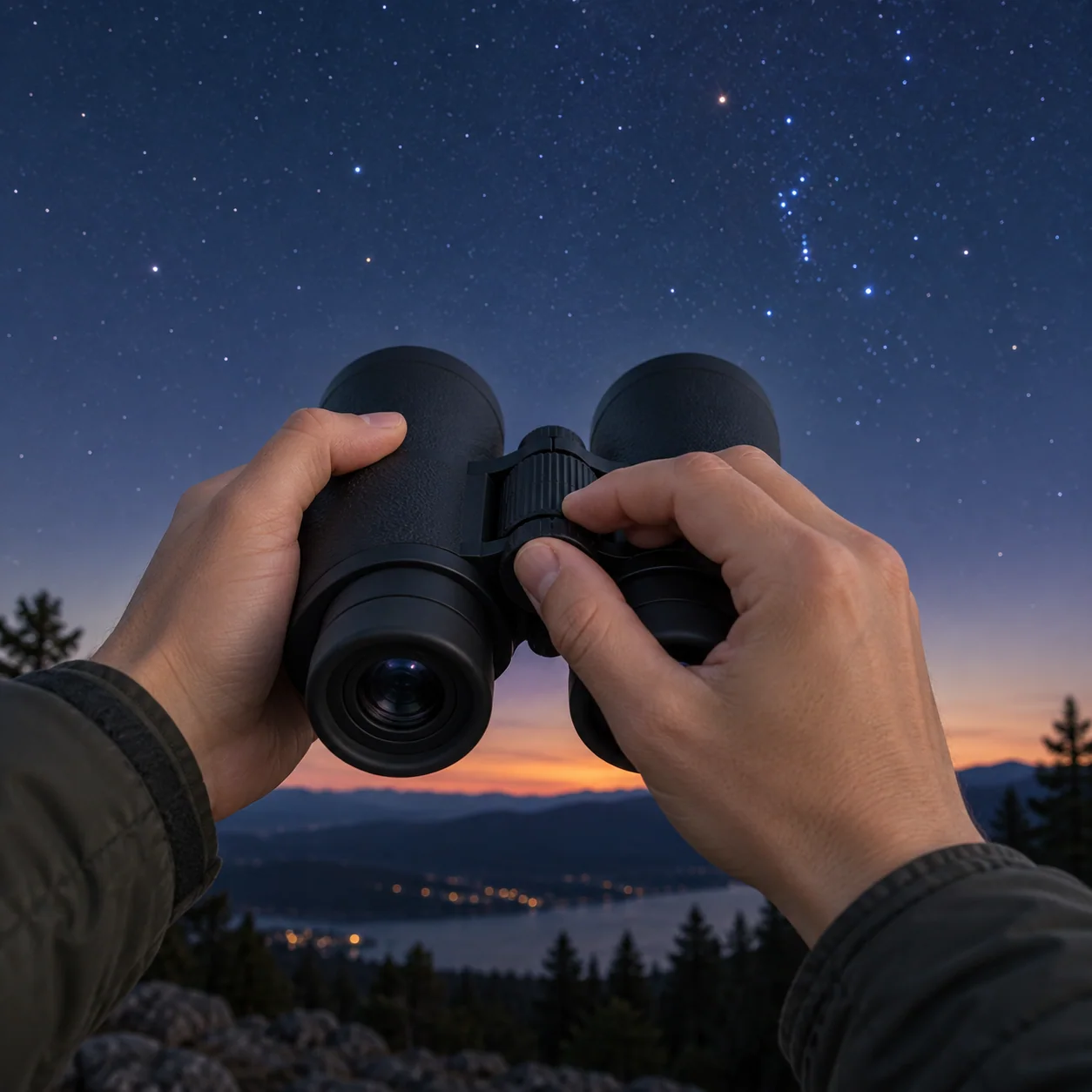
Make one circular field
Stand or sit still and adjust the spacing between the two barrels until your eyes see one comfortable round field. Do this on a distant terrestrial object in daylight only when the instrument points well away from the Sun, or on the Moon after dark. Do not force the hinge. If you use eyeglasses, adjust eyecups according to the manufacturer's instructions so the full field remains visible. A doubled image that persists after spacing and focus adjustment can indicate misalignment; do not strain your eyes to compensate.
Focus one side first
At night, select a bright star or the Moon. Cover the side with the diopter adjustment, or close that eye without squeezing, and turn the center wheel until the other side is as sharp as possible. Stars should be points, not large soft disks, within the instrument's optical and atmospheric limits. A low Moon may shimmer because of air movement; use a higher target if available. Make small adjustments and pause to assess, rather than spinning the wheel through its whole travel repeatedly.
Then set the diopter
Keep the main wheel where it is and switch eyes. Use the diopter control to bring the second side into focus. Check both eyes together, then make only a small final adjustment with the center wheel if needed. Note the diopter setting before someone else borrows the pair. If you cannot reach a relaxed, single image, stop and recheck barrel spacing, eyewear and instrument condition. Focusing should not require force. A pair with damaged optics or severe collimation problems needs competent repair, not improvised adjustment of internal screws.
Test on two different subjects
After a bright star, try the Moon or a group of stars. An isolated star helps reveal whether the point is sharp; the Moon's edge makes gross blur easier to notice. If the center is sharp but the outer field soft, that can be an optical characteristic rather than a focus error. Do not chase perfect edge-to-edge points with the main wheel at the expense of the center. Keep the binoculars steady while evaluating. If the target moves, lower the instrument and relocate it with your naked eye.
Separate optics from conditions
Warm air above a roof, haze and hand shake can make a properly focused image look poor. Compare a higher target or rest your elbows before changing settings again. If only one eye is persistently blurry, recheck its diopter and your own eyewear prescription needs. This article cannot diagnose vision issues. Most importantly, never use an unfiltered optical instrument to focus on the Sun. Even a quick “test” is unsafe; beginner focus practice belongs on night targets or safe terrestrial scenes far from the Sun.
A reset when someone else used the pair
Shared binoculars often come back with the diopter moved. Before your next sky session, point toward a safe distant object in daylight well away from the Sun, or use a bright night target, and repeat the one-eye sequence from the start. Do not assume the focus wheel alone can compensate for a second-eye difference. If another observer wears glasses, their eyecup position may differ from yours too. Mark a personal diopter setting discreetly in your notes rather than drawing permanent marks on borrowed equipment. If the same side remains soft even after a careful reset, switch eyes to see whether the problem follows the instrument or your vision; do not draw a medical conclusion from one informal test. Seek appropriate optical or eye-care advice when persistent discomfort occurs. The useful editorial lesson is that focus is personal and repeatable, not a one-time factory setting.
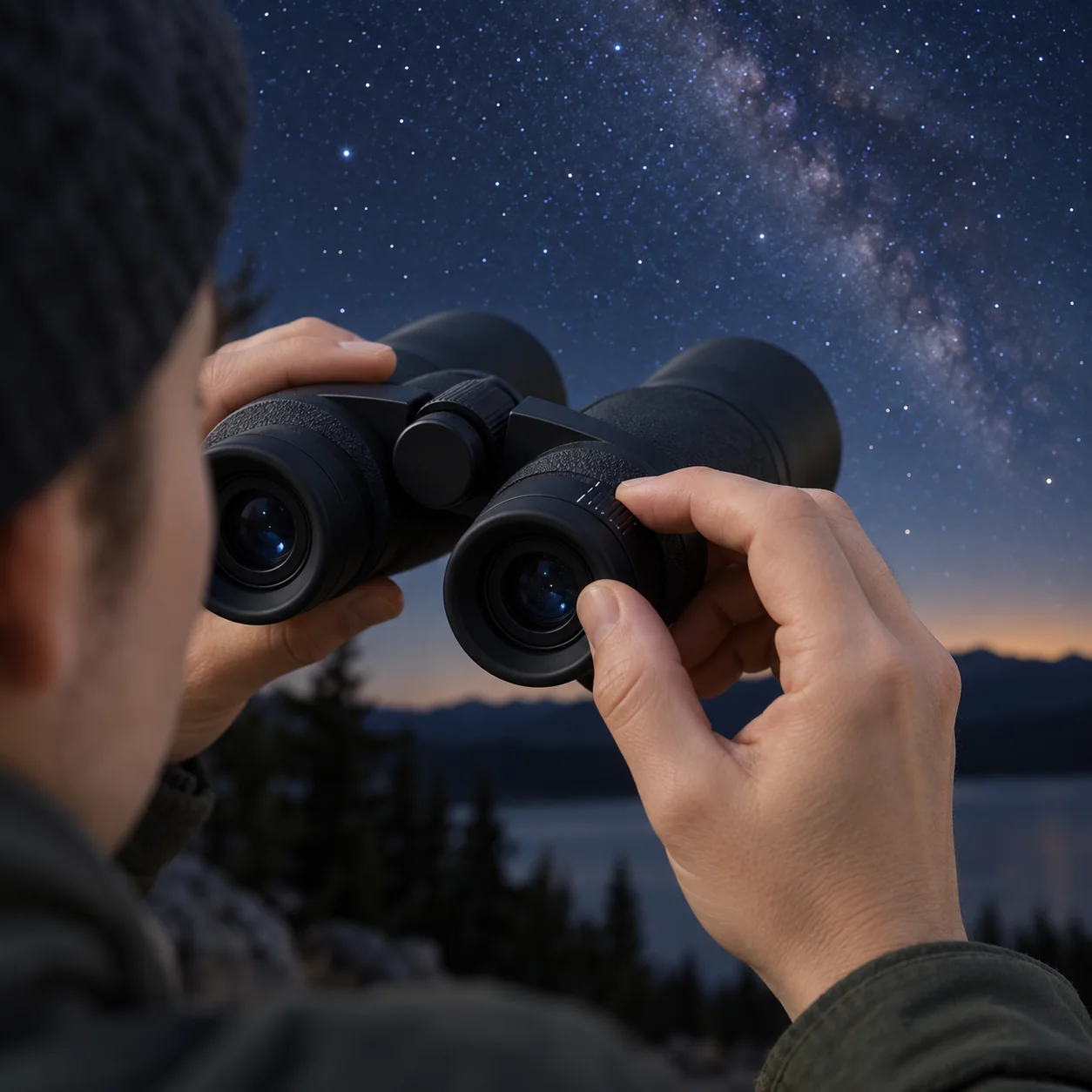
Focus is a repeatable sequence: spacing, main wheel for one eye, diopter for the other, then a calm binocular check. It makes every later target easier to judge. On some binoculars each eyepiece focuses independently, so the center-wheel sequence described here does not apply exactly. Check the model manual before forcing any control. The transferable principle is still to establish a relaxed single image, focus each eye appropriately, and verify the combined view on a safe nighttime target. Check the opposite eyepiece after the first one: a sharp monocular view does not guarantee both eyes are receiving a relaxed image.
Continue observing
- 7x35 or 10x50 for Stargazing? Start With What You Can Hold
- How to Read a Star Map Without Turning the Sky Upside Down