Shaking can make a bright object flicker and a faint one vanish, even with perfectly adequate binoculars. You need not buy a mount before discovering what your current pair can do. A few changes to posture and target choice can make a first session more useful. This guide is about steadiness while standing or sitting safely, not using binoculars while moving.
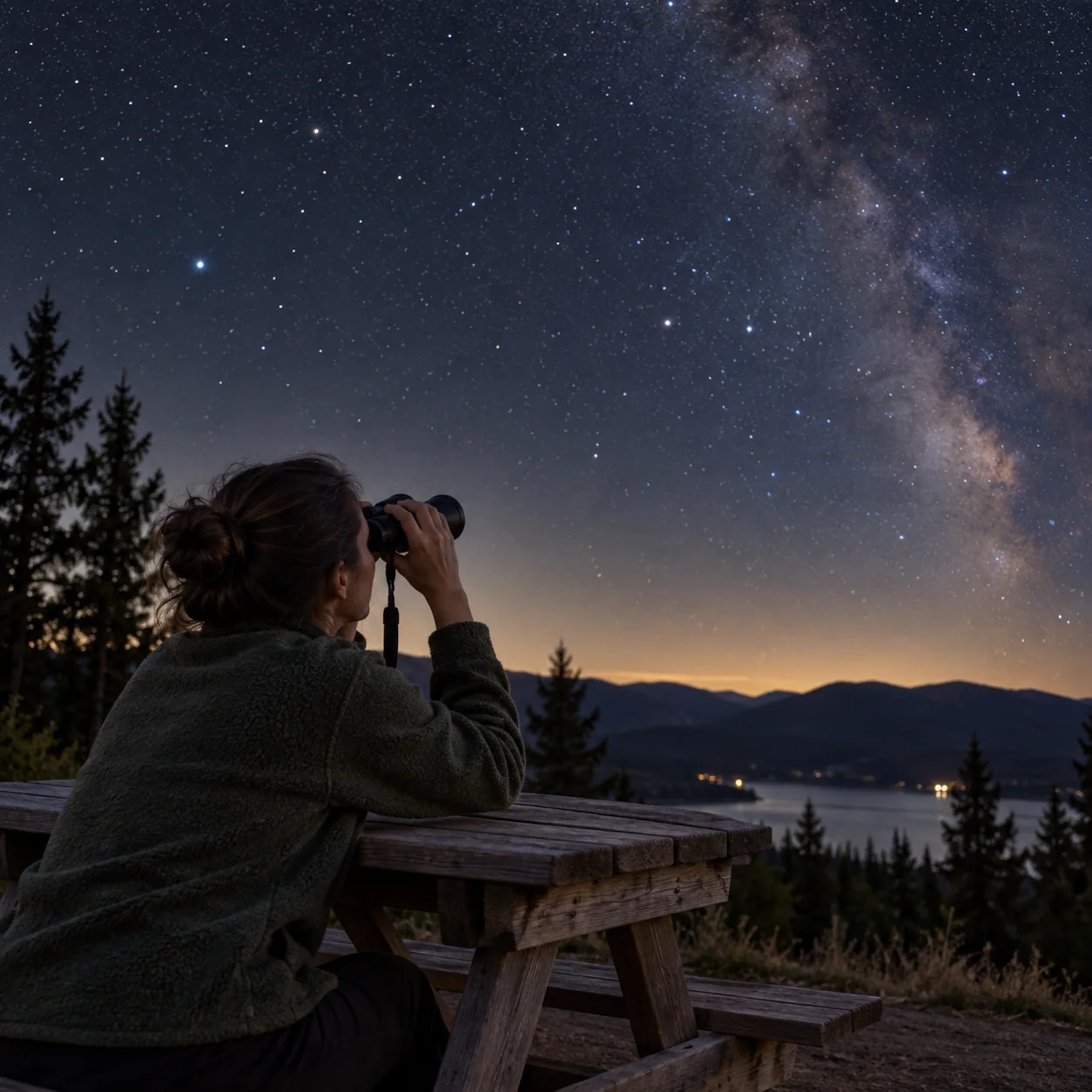
Sit before changing the instrument
A stable chair lets you relax shoulders and hold the binoculars without using balance to keep your body upright. Plant your feet and support elbows on knees, chair arms or a solid tabletop where the viewing angle permits. Do not put a sharp tripod leg or slippery stool in a walkway. If the target is high overhead, a reclining chair may reduce neck strain, but use only a stable chair in a clear area. A comfortable observer often notices more than a tired observer with a stronger pair.
Give your hands a physical reference
Hold the binoculars near their balance point and let elbows rest where possible. Breathe normally; holding your breath for long periods makes you tense. For a low target, a fence or railing can provide elbow support if it is sturdy and safe. Never lean over a balcony edge or step backward while looking through the optics. Lower the binoculars, relocate the target with your eyes, then raise them again. This repeated sequence builds aiming skill while keeping attention on the ground whenever you move.
Magnification is not free detail
As magnification rises, the same hand movement appears larger in the image. A lighter 7x pair may show a clearer usable view than a heavier 10x pair in shaky hands, even though the latter can reveal more under steadier conditions. NASA cautions that very powerful handheld binoculars can jiggle significantly and suggests trying manageable sizes first. If you already own a larger pair, test it seated before replacing it. A telescope or mounted binocular can be useful later when a target truly calls for steadier high magnification.
Measure improvement with one target
Choose the Moon's edge or a distinctive star group. Look for a short period while standing, then repeat from a supported seat without changing focus or sky position more than necessary. Did the edge remain in the field longer? Could you distinguish an extra point in the cluster? Write down the comparison, including wind and how high the target stood. If the difference is small, do not invent one. Sometimes transparency or focus, rather than shake, is the main limit on what you can see.
When a mount is justified
A sturdy tripod, adapter or specialized mount becomes useful if sessions are long, binoculars are heavy, or multiple observers need to share a stable view. Check that the instrument actually supports an adapter and that the mount can safely hold its weight. Do not assume a camera tripod alone provides a comfortable view of targets near the zenith. Try a local astronomy club's equipment if possible before buying. Any mounted setup should leave a clear path for people in the dark and be packed up with enough light to avoid trips.
A ten-minute steadiness test
Select a single bright target that is easy to reacquire and begin with two minutes standing. Write down how long you can hold it inside the central field without readjusting. Sit and repeat with elbows supported, then compare. Keep focus and binoculars unchanged. If sitting helps, the simplest solution may be to bring a chair on future outings. If it does not, check whether the issue is wind, a loose focus control or a target too high for the posture. For long sessions, give arms regular rest instead of forcing a rigid grip. Do not balance binoculars on an unstable fence or vehicle roof where they can fall. A later mount trial should repeat the same target exercise before you decide whether the extra setup is worth its storage and carrying cost. This small test makes the purchasing decision about your actual observing, not advertising language.
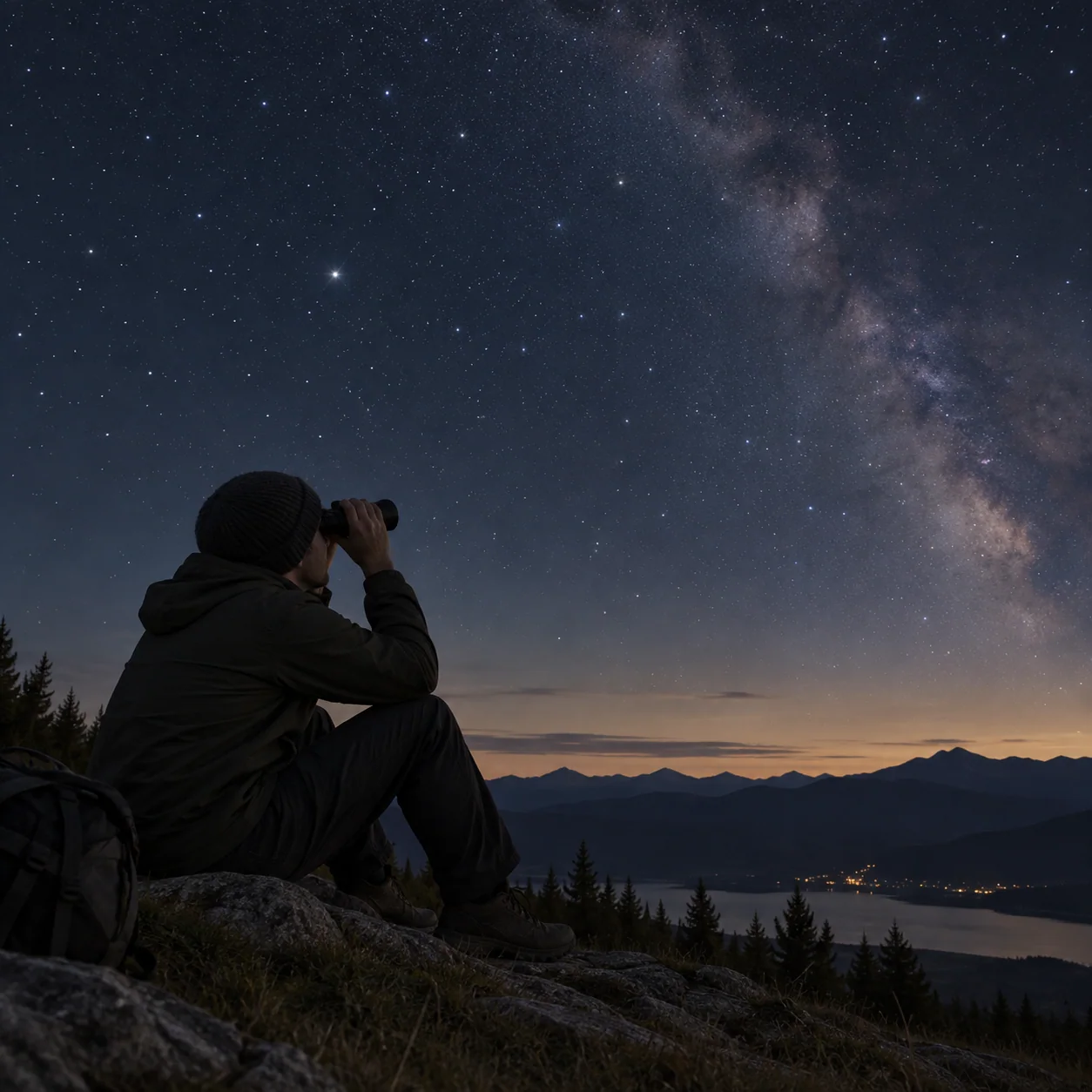
Steadiness is an observing technique, not merely a product specification. Practice the comfortable position before paying for another piece of equipment. If a mount becomes attractive, ask whether your favorite targets sit high overhead. A standard tripod can be awkward at steep angles, while a reclining chair may solve the comfort problem cheaply. Consider the observing posture and the mount’s rated capacity before adding gear. A stable installation should never turn a shared dark walkway into a hazard. A short rest between looks can improve comfort and help you distinguish muscle fatigue from an actual limitation of the optics.
Continue observing
- 7x35 or 10x50 for Stargazing? Start With What You Can Hold
- Keep Your Night Vision While Stargazing at Home