The first obstacle in a city sky is often glare, not a lack of astronomical knowledge. Improving the light environment can reveal stars you missed without buying another instrument. But total darkness is not the goal when you need to move safely around steps, vehicles or unfamiliar ground. Treat night vision as one part of a sensible observing setup.
Remove the direct lamp
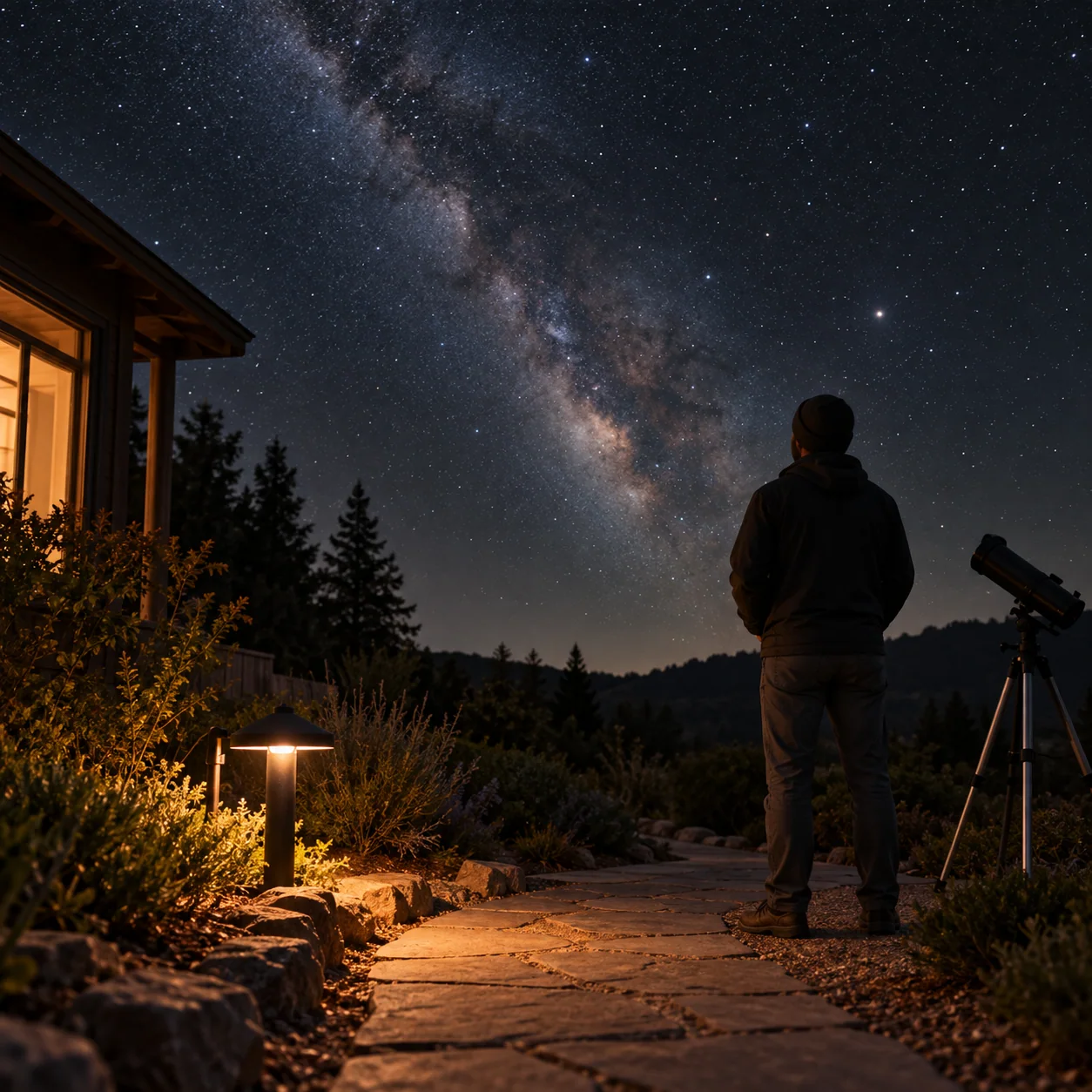
A porch light shining into your eyes is more disruptive than a distant glow you cannot control. Stand where a wall or tree blocks direct glare without blocking your chosen target. If you control an outdoor fixture, use it only as much as safety requires and shield it so it lights the ground rather than the sky or your face. Do not switch off lighting needed by other household members or neighbors. A safe path back indoors takes priority over a faint galaxy. In many neighborhoods, simply changing where you stand is the most practical intervention.
Give your eyes time
Once you stop looking at bright screens and lamps, faint stars become easier to notice. The adjustment is gradual and can be interrupted by a sudden white phone screen. Cover the screen or choose a low-brightness night setting before going outdoors. A red task light may be useful for reading a chart; keep it dim and pointed at the page rather than at another person's eyes. Color alone is not magic: a very bright red lamp can still be distracting. If you need to inspect a hazard, use enough light to do so safely.
Select the right target for the sky
The Moon and bright asterisms remain worthwhile under light pollution. A galaxy or faint nebula may not. Instead of repeatedly searching for a missing smudge, test your conditions with a known bright pattern. Count only the stars you can confidently distinguish around it and note the result. On a later, darker night, repeat the same check. A difference tells you more than a single impression that the sky was “good” or “bad.” Also note cloud cover and moonlight, because both can change the comparison.
A household agreement
If you observe from a shared yard or balcony, agree with others before changing lamps. Keep tripods out of walkways and avoid shining lights through windows. From a balcony, do not lean over rails to chase a low object. When observing with children, establish a boundary they can see and a rule for moving only with an adult. Bright light is sometimes necessary for a safe exit. The observer's job is to make the session pleasant and repeatable for everyone, not to win a contest for maximum darkness.
When darker travel makes sense
A truly faint target may call for a site with less skyglow, but plan the trip like any other nighttime outing. Check legal access, hours, weather, parking and a return route; bring someone or tell a trusted person your plans. Do not trespass for a better horizon. If the destination is isolated or unsafe, postpone. Once there, begin with the naked eye before unpacking gear. You can decide whether the improvement justifies the journey by comparing the same familiar star pattern you used at home.
A controlled glare comparison
Try observing the same small patch from two safe positions on the same evening. The first might face an exposed porch lamp; the second might use a wall to block that direct beam while retaining a clear view overhead. Give your eyes a little time at each spot, then count only points you can identify in both positions. Do not use the exercise as a reason to move into a dark unsafe corner. If a light must remain on for a shared walkway, let it remain on and change your own position. Record whether cloud or passing vehicles affected the comparison. In a city, a bright lunar target may be unchanged even when fainter stars improve. That difference is informative. It tells you that a lighting change helps particular classes of target rather than magically restoring every dark-sky view. On another night, repeat with moonlight absent before making a confident judgment about the yard.
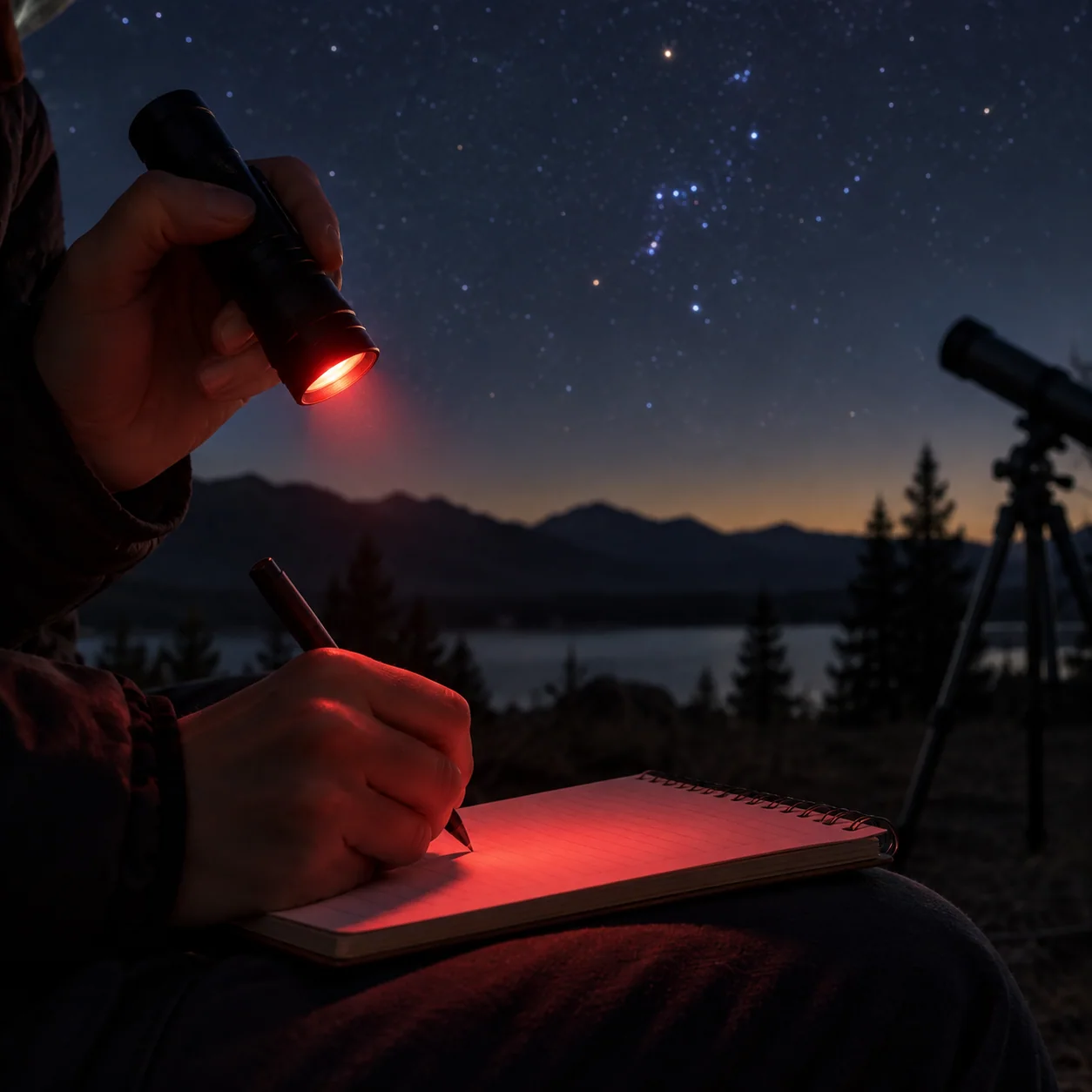
The practical rule is simple: block direct glare, let your eyes settle, and choose a target suited to the actual sky while keeping the ground safely visible. A dim lamp for reading and a brighter light for packing can coexist. Separate those tasks physically: observe from the shielded spot, then move to a safe lit area before folding chairs or tripods. A red light is useful only when kept low in intensity. Safety remains the first constraint whenever a step, cable or vehicle is nearby.
Continue observing
- Your First Night of Stargazing: A Twenty-Minute Plan
- Observe the Moon With Binoculars Before Buying a Telescope