A full Moon can look smooth through a telescope compared with a quarter Moon, yet it remains a rich naked-eye target. Instead of hunting for long crater shadows, use the bright disk to notice broad contrasts: dark maria and lighter highlands. This is a pattern-recognition activity, not a claim that every patch you see has an obvious geological boundary.
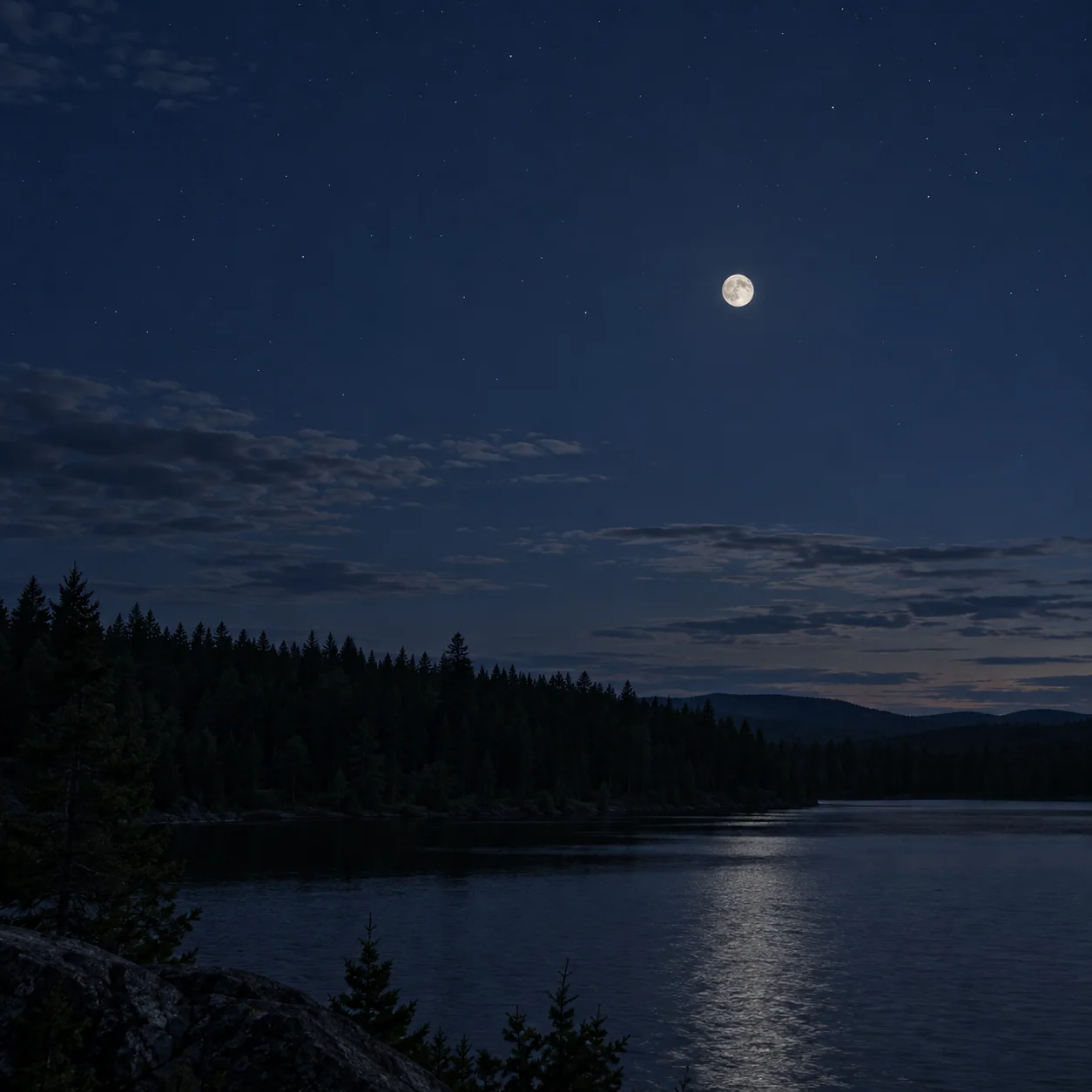
Begin without optical equipment
Find an open, safe place when a full or nearly full Moon is visible and the Sun is below the horizon. Let your eyes relax. You may notice a few large gray regions against a brighter background; people sometimes turn those patterns into faces or animals. Before consulting a map, draw the pattern you see. Your sketch can be rough because the purpose is to distinguish the broad areas independently. Clouds, haze and low altitude may soften contrast, so write down conditions along with the drawing.
What the dark patches are
The dark areas are lunar maria, broad ancient basalt plains; the lighter regions include higher terrain. They are not bodies of liquid water despite the historical “sea” names. A simple current Moon map can help you identify a major plain after you have observed it. Avoid tracing an image as though it were an unaided-eye observation. An illustration or high-resolution spacecraft image resolves far more than a person standing in a suburban yard. Your page should say what instrument, if any, you used.
Why the disk can look flat
At full phase the surface is brightly lit from a direction relatively close to our line of sight, so many relief shadows appear short. NASA recommends other illuminated phases, particularly along the terminator, for crater and mountain contrast. The full Moon is therefore not “bad”; it answers a different visual question. Compare a full-disk pattern now with a shadow-rich partial phase later. The same dark plain may stay recognizable while nearby relief changes dramatically. That comparison helps separate surface color and brightness from topographic shading.
Binoculars add scale, not color spectacle
A steady pair of binoculars can make large plains and bright regions easier to outline. Sit down and support your arms, especially if the Moon is high. A handheld view will still look pale rather than like digitally enhanced lunar photography. If you switch to a telescope, choose low power first to keep context. Note any inversion or mirroring in the view. If you cannot match a named feature to the map, step back to the broad pattern and try again later. There is no need to force a definitive identification.
Use the bright night honestly
Full-moon light may wash out faint galaxies and some star fields, so plan a Moon-focused evening rather than judging the whole sky's quality. Look at the foreground shadows too, but remain on a safe path. If you take a phone image, label it as a camera capture; automatic exposure and processing can change the apparent contrast of the maria. For a public article, distinguish a real documented observation from generated or illustrative media. The Moon is safe to inspect at night with ordinary optics; solar safety rules remain separate and much stricter.
A full-versus-quarter viewing card
Create two columns labeled “broad surface pattern” and “shadowed relief.” During the full-Moon session, fill only what you can identify in each. The broad-pattern column may contain several dark areas; the relief column may contain little confidently distinguished detail. On a partial-Moon night, repeat with the same instrument if possible. A stronger relief entry does not mean the surface grew new mountains; the light angle changed. This simple card prevents a common beginner disappointment when a full Moon through a telescope looks less rugged than expected. If you compare photographs, use images with known capture conditions and processing notes, since contrast enhancement can make the two phases appear more similar than they looked directly. Finally, note whether the full Moon brightened your local sky enough to hide nearby stars. The Moon can be both a splendid target and an obstacle for a faint-object search on the same evening.
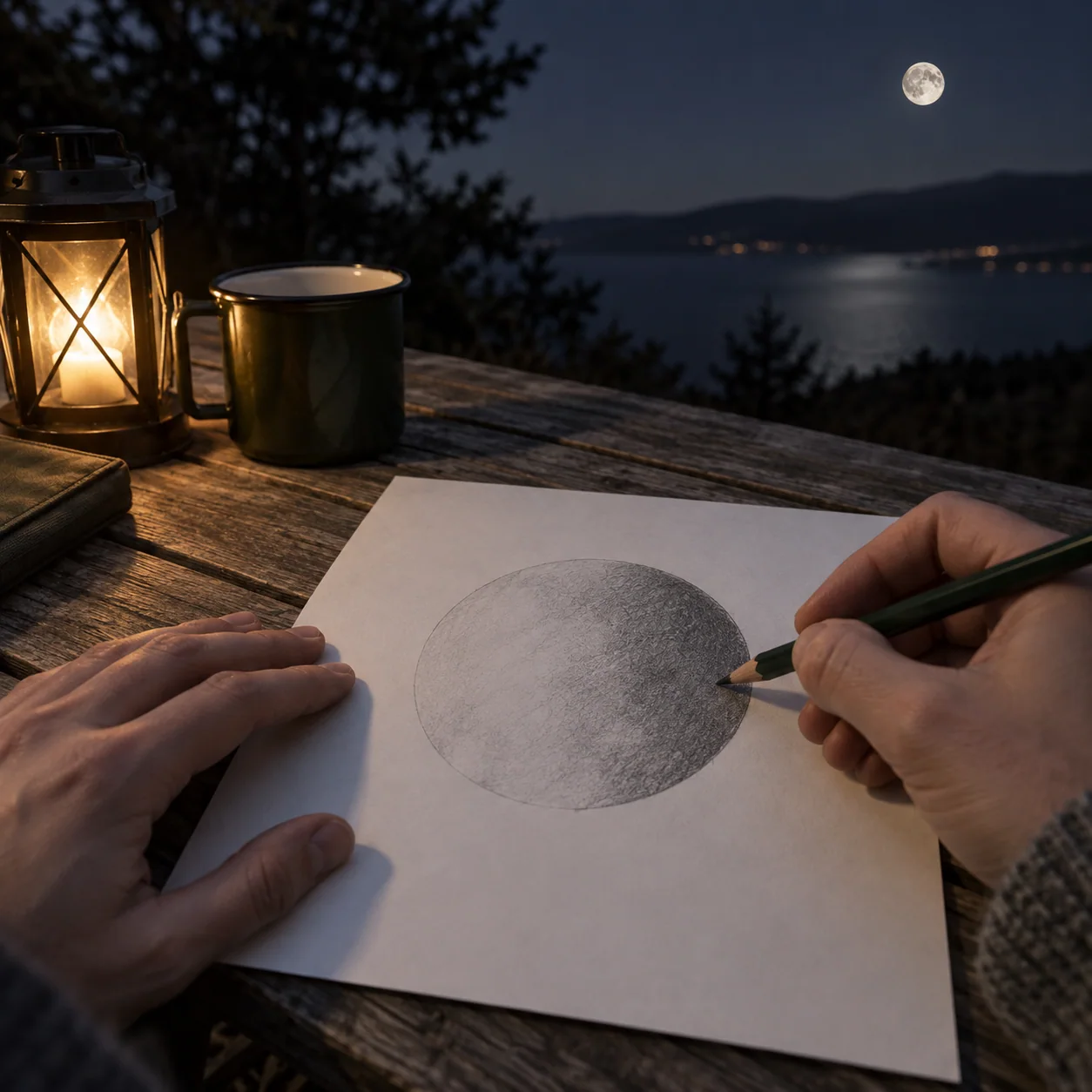
A full Moon invites broad visual geography. Return at a partial phase when you want to study the drama of shadows. Avoid describing the maria as oceans in the present tense. Historical names can be charming, but the dark areas are ancient volcanic plains, not liquid water. A public beginner article should make that distinction explicit while leaving room for the observer’s own pattern recognition. The Moon can be both culturally familiar and geologically surprising.
Continue observing
- Why a Half Moon Can Show More Relief Than a Full Moon
- A Careful First Search for the Andromeda Galaxy