Binoculars spend nights outdoors and days in bags, where moisture, dust and hurried cleaning can shorten their useful life. Basic care does not require polishing a lens after every session. It requires protecting the glass, letting damp gear dry appropriately, and handling it without forcing fragile parts. Follow your model's manual if it gives more specific directions.
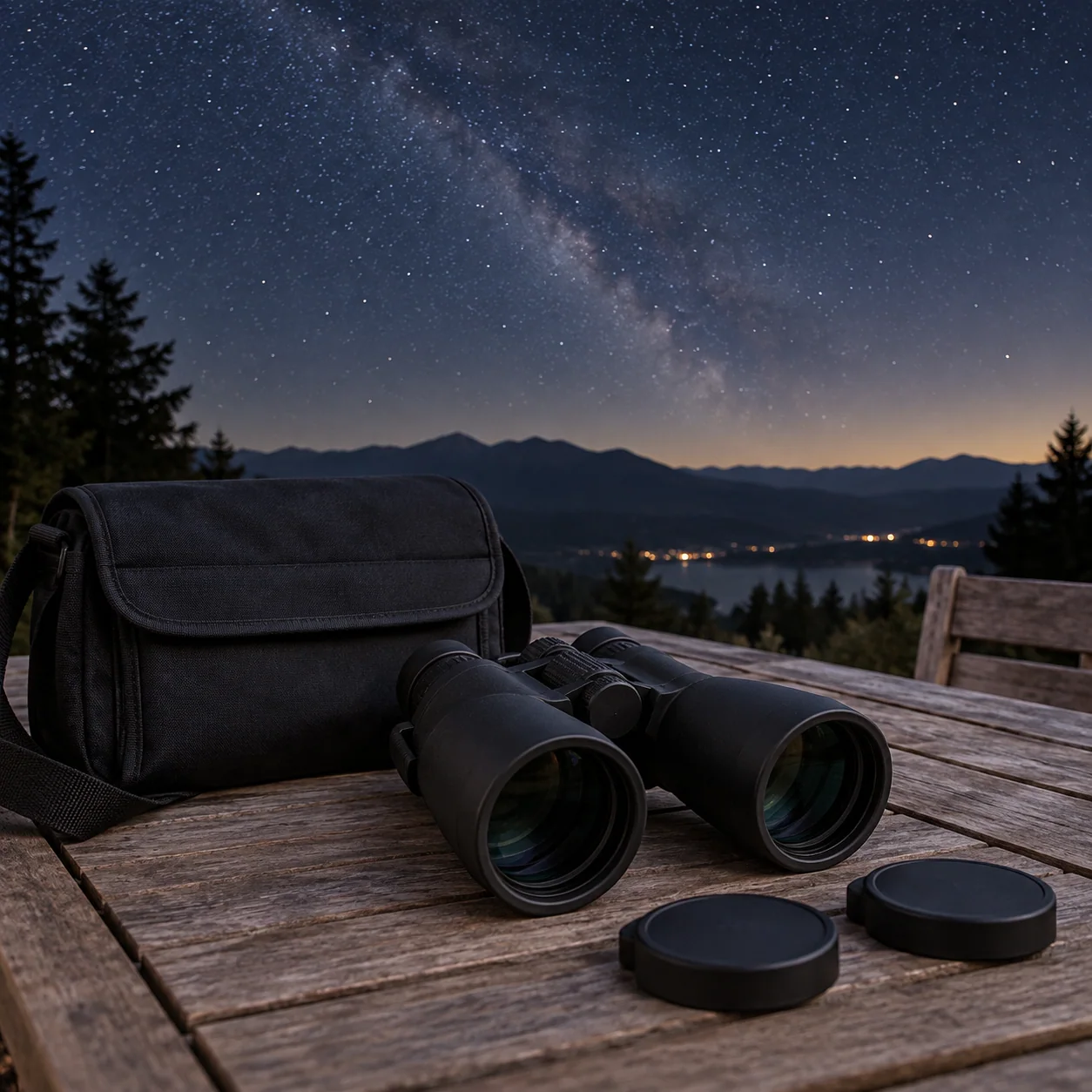
Pack deliberately before the session
Put caps, a soft case and a clean lens cloth where you can find them in the dark. Use a neck strap only if it is sound and comfortable; check its attachment points before walking. A case protects the binoculars during transport, but it should not become a place to trap moisture after a dewy night. Carry the instrument with caps on in daylight and never point it near the Sun. Keep it separate from loose keys, gritty tools or drinks that might leak onto the optics.
Dust is not an invitation to rub
If you see loose particles on a lens, use a suitable blower or very soft lens brush according to the manufacturer's guidance before touching the surface with a cloth. Rubbing grit directly across coated glass can scratch it. Use an appropriate optical cleaning solution only if necessary and approved for the lens coating; apply it to a cloth rather than flooding the binocular body. Household paper towels and shirt hems are poor substitutes. If the view is already clear and the glass only has a little harmless exterior dust, leaving it alone may be safer than repeated cleaning.
Handle condensation calmly
Cold binoculars brought into warm humid air may fog. Do not scrape the droplets away or put the instrument beside a heater. Allow it to come to room temperature and dry in a suitable place before sealing it in its case, following the manual's advice about caps and storage. Avoid disassembling waterproof seals. If water has entered the body or internal haze persists, stop using it and seek appropriate service. A dry case and a brief check the next morning prevent a simple dew issue from becoming a prolonged damp-storage problem.
Check alignment before blaming the sky
At a safe nighttime target, both eyes should merge comfortably into one view after spacing and focus adjustments. Persistent double vision or a headache may indicate misalignment or a personal vision issue. Do not turn hidden optical screws based on a quick online trick; that can worsen collimation or void support. Compare with another pair if available and consult the manufacturer or a competent repair service. A lens cloth cannot fix an optical alignment problem, and repeated eye strain is not a reasonable price for continuing a session.
A small routine after each outing
Return to a safe lit area, check for obvious moisture and brush away exterior debris without pressing on lenses. Let the equipment dry before long-term storage and replace caps once appropriate. Note any unusual focus behavior so you can distinguish a preexisting issue from a new one. Store the case where it will not be crushed or exposed to extreme conditions. A modest routine makes binoculars ready for the next clear evening and saves time when the sky briefly cooperates.
A dry-case check the following morning
After a dewy outing, place the binoculars in a secure room-temperature location according to the maker's care directions and let exterior moisture dissipate before final packing. The next morning, inspect the case and caps for dampness and look through the binoculars at a safe distant scene well away from the Sun. Make a brief note if focus feels different or if internal haze remains. Do not disassemble the housing to chase persistent moisture; seek qualified service. A case that smells damp or holds wet foam should dry separately before the optics go back inside. This follow-up takes little time and makes the next clear night easier. It also distinguishes normal external condensation from a continuing internal problem. Regular, gentle checks are more effective than aggressive lens wiping after every trip.

Good care is restrained care: protect, dry, clean only when needed, and leave internal repairs to someone equipped to do them. For borrowed or shared binoculars, document the case arrangement and any existing wear before a trip. Return caps and straps as they were received and report a new issue promptly. This is ordinary equipment courtesy, but it also keeps a later observer from mistaking damage or poor focus for difficult sky conditions. Store the case separately while it dries; returning clean optics to damp foam defeats the point of the cleaning routine.
Continue observing
- 7x35 or 10x50 for Stargazing? Start With What You Can Hold
- First Light With a Borrowed Telescope: Start With the Moon