A borrowed telescope can make a beginner's first night feel crowded with knobs. Resist the urge to start with a faint planet or a distant galaxy. A visible Moon gives a generous target, but the setup should be understood before darkness. This guide assumes a small ordinary telescope used only at night and does not cover solar observing.
Daylight rehearsal without solar risk
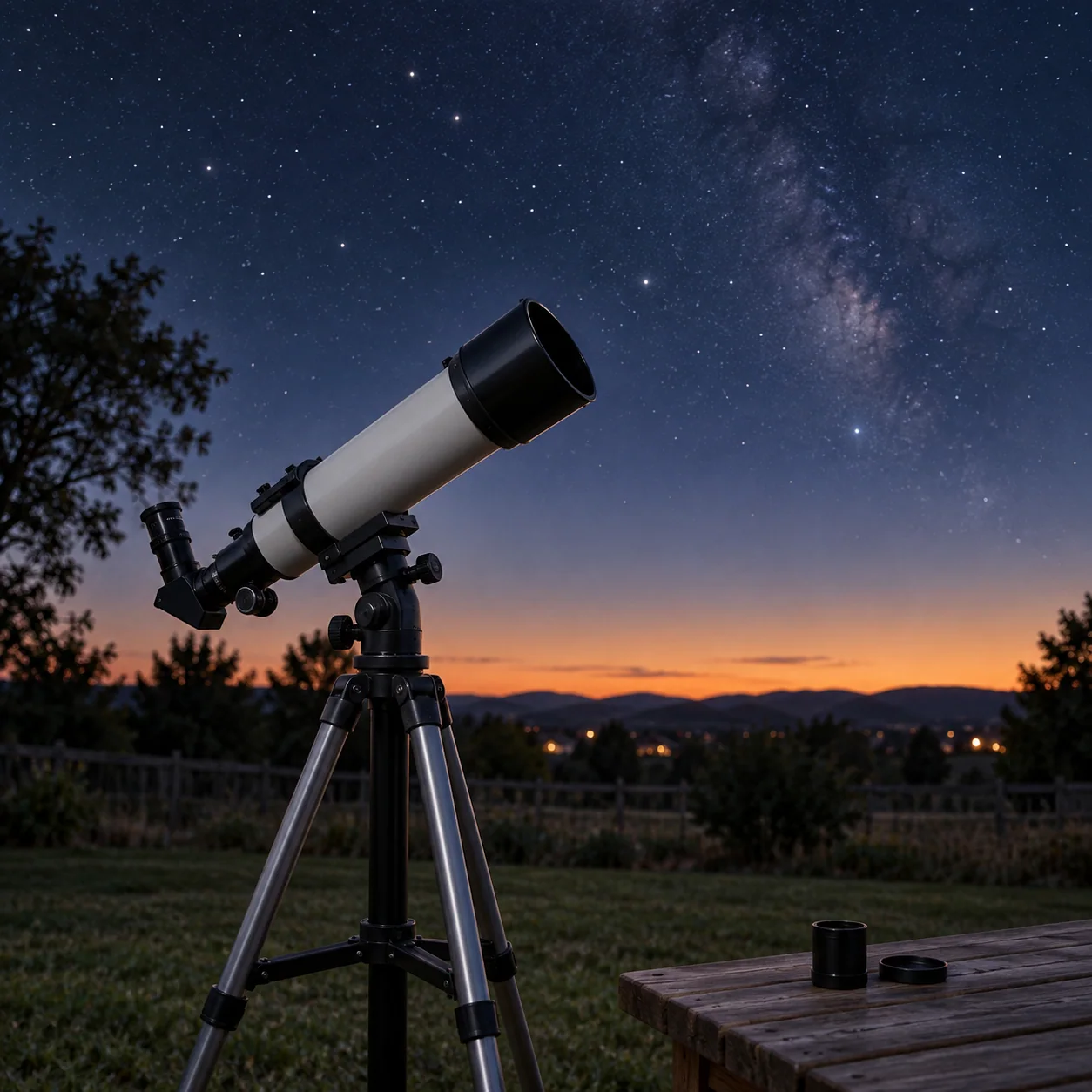
Set up the tripod on firm, level ground and learn how the mount moves with its locks released and secured. Find the low-power eyepiece and practice inserting it while the telescope is capped or pointed toward a safe terrestrial direction well away from the Sun. Do not align a finder by aiming anywhere near the Sun. Keep children from moving the instrument in daylight. Check that each leg is stable and the eyepiece can be reached without pulling on the tube. A borrowed instrument may have unfamiliar parts; ask its owner what is fragile or missing.
Choose a first nighttime target
Wait until the Sun has set and the Moon is in a safe, clear part of the sky. A bright partial Moon gives a strong contrast boundary, although a full Moon also works for learning focus. Start with the lowest magnification available because its wider field makes finding the target easier. Aim with the finder or sighting aid only after you know its alignment. If the view is black, do not immediately switch to a stronger eyepiece. Check the front cap, the selected direction and whether the Moon is inside the finder field.
Focus slowly
Look through the eyepiece without pressing on it and turn the focus control in one direction. If the image grows blurrier, reverse. At the correct focus, edges should be as crisp as the atmosphere and telescope allow. Heat rising from roofs or pavement can make a sharp image shimmer; more magnification often makes that worse. If the Moon slides out of view, gently re-center it using the mount's normal controls. Do not force a stiff axis. Ask the owner before changing any adjustment you do not recognize.
What the Moon should teach
Note one dark plain, the shape of the illuminated edge and a patch of shadowed relief. The image may be upside down or reversed; this is a property of the optical path, not evidence the sky is wrong. Compare it with a current lunar map only after you have described your own view. If you have a second eyepiece, try it after the low-power view is comfortable and then decide whether the extra scale helps. The best view is not necessarily the largest view. Record the eyepiece used so you can repeat the result.
Finish without damage
Move the instrument to a safe position, replace caps only when surfaces are dry, and follow the owner's packing instructions. Avoid wiping a dusty lens with a shirt. If moisture has formed, ask how the owner normally dries the equipment before storage. Leave yourself enough light to dismantle tripods without tripping. Above all, never point a telescope, finder, or binoculars at the Sun unless a specialist-approved front-mounted solar filter is correctly installed and the procedure is supervised by someone knowledgeable. Eclipse glasses at the eyepiece do not make an unfiltered telescope safe.
Borrowing etiquette and a no-surprises checklist
Before taking the instrument home, ask the lender how to carry it, which pieces are included, and whether any alignment has already been set. Photographing the packed arrangement for personal reference can help with return, provided no one else's private information appears. In daylight, put the capped tube and tripod together in a space without the Sun in the instrument's possible pointing path. Learn where the low-power eyepiece is stored and whether the finder has a cover. Do not loosen unfamiliar screws merely to make the view move. At night, let the Moon act as a large target. If you cannot obtain an image within a few minutes, pause and review caps, eyepiece seating and finder alignment instead of increasing power. When finished, return parts to their original places and report any accidental damage. Borrowing works well when the owner can trust that you respected both the equipment and its limitations.
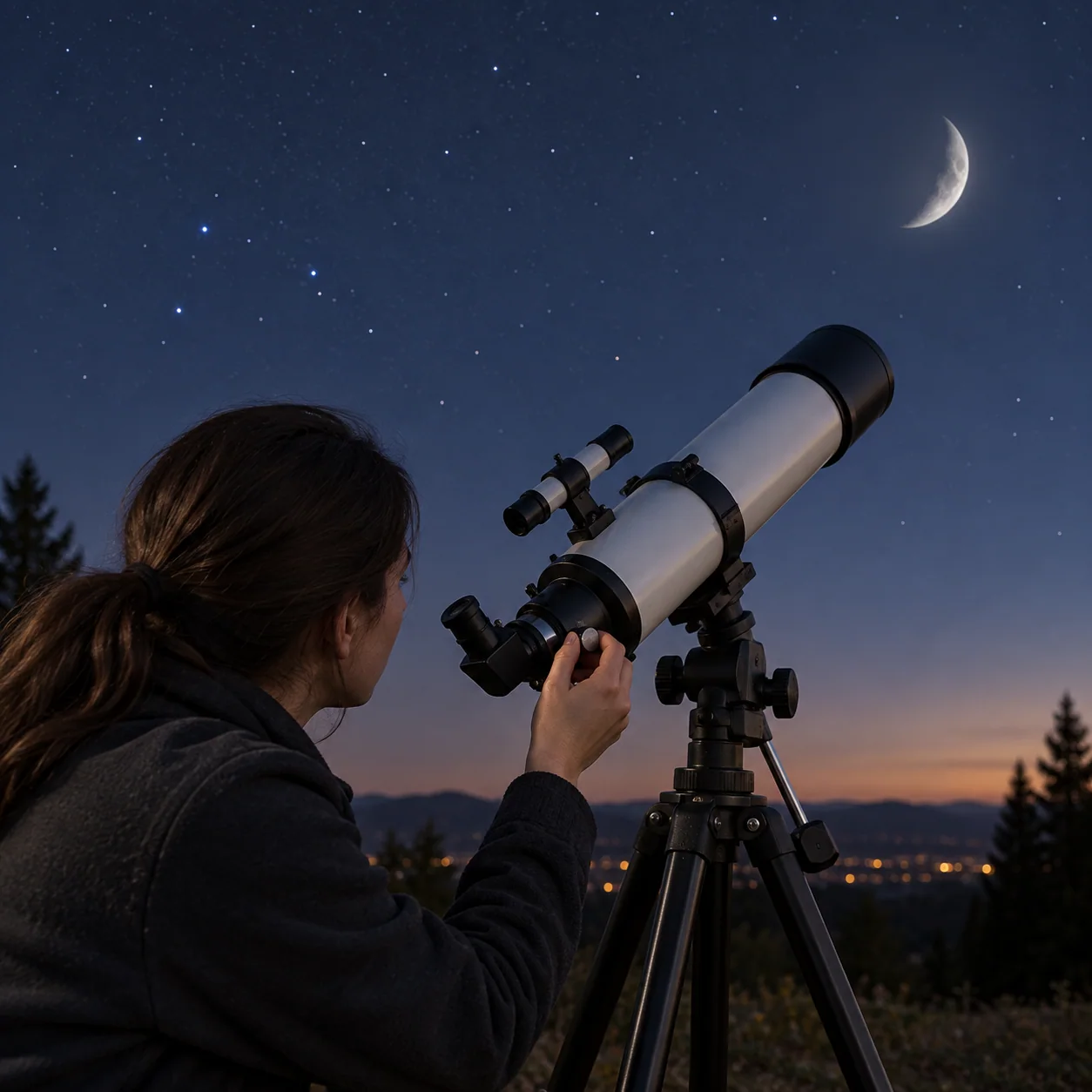
First light is not a performance test. It is a short exercise in stable setup, safe pointing, low-power finding and careful focus. If you want to involve a child, assign them the job of spotting the Moon with unaided eyes while an adult manages the mount. Explain that the telescope is never moved toward the daytime Sun. Keep fingers away from an exposed objective and give each viewer time to refocus gently. A calm queue is better than passing the instrument around.
Continue observing
- Your First Night of Stargazing: A Twenty-Minute Plan
- Reading the Full Moon: Dark Plains, Bright Highlands, and Realistic Detail