Three stars far apart can be easier to learn than a detailed constellation. Vega, Deneb and Altair form the Summer Triangle, an asterism prominent on many Northern Hemisphere summer evenings. It can remain visible from fairly bright places where fainter star patterns disappear. This is not a year-round or globally identical evening target, so begin with a current local map.

Start with the season and horizon
Check the chart for your latitude and evening hour. In northern summer, the three bright corners rise and shift through the night. A tall building can block one corner while the other two appear obvious. Move to a safer open view or try later rather than drawing a triangle to an unseen point. Vega, Deneb and Altair sit in different constellations; the triangle is a recognizable convenience, not a formally separate constellation. Record which direction you faced and how high the pattern appeared.
Connect only confirmed points
Find the brightest candidate using a chart rather than assuming that every bright light is a star. Aircraft move, planets change position from month to month, and a streetlight near the horizon can deceive a tired observer. Once the first corner is secure, trace the broad shape to the other two. The sides are not equal, and the pattern can rotate in your view as the night progresses. Draw the geometry roughly, labeling the three stars afterward from the chart. The act of checking each identification matters more than a perfect triangle.
What city skies can and cannot show
NASA notes that the Summer Triangle's bright stars can be visible even under light pollution. That does not mean the Milky Way between or around them will appear in the same sky. A city observer can learn the three anchors while leaving faint background structure for a darker trip. Avoid images that paste a brilliant multicolored Milky Way over a downtown view as if that were the direct-eye experience. For the reader, the practical achievement is recognizing the triangle at home and using it to orient later exploration.
A two-place comparison
If you have access to a darker legal observing site, find the triangle there without opening the map immediately. Compare the number of nearby stars you can see, and note moonlight and haze before crediting darkness alone. A wide binocular field may reveal more background stars, but it cannot include all three corners at once in an ordinary view. Keep the binoculars down while learning the large-scale pattern. Use them afterward for a smaller region near one star, with a chart that identifies a specific target.
What to learn next
Once the shape feels familiar, find the constellations containing its corners: Lyra for Vega, Cygnus for Deneb and Aquila for Altair. This is a new exercise, not a requirement for the first evening. A repeat visit later in the season will show the pattern at a different position at the same clock time. Note the month and hour on each sketch. That change is a reason to prefer evergreen instructions with a seasonal range over a static promise that the triangle will be overhead at a fixed hour every summer night.
A seasonal check that avoids a false promise
Make two sketches from the same safe observing place several weeks apart, at approximately the same local clock time. Draw only the three confirmed corner stars and the horizon. The triangle should occupy a different part of the sky as the season advances. Record the exact dates because the night sky changes continuously, not at the instant a calendar labels “summer.” A nearby lamp may erase many surrounding stars without hiding the corners. In your note, separate that local visibility from the claim that the Milky Way is visible there. If you have binoculars, use them to investigate a smaller charted area only after you can identify the whole triangle by eye. No typical binocular view will comfortably frame all three widely separated corners. The scale mismatch itself is a useful lesson in choosing between naked-eye patterns and instrument fields.
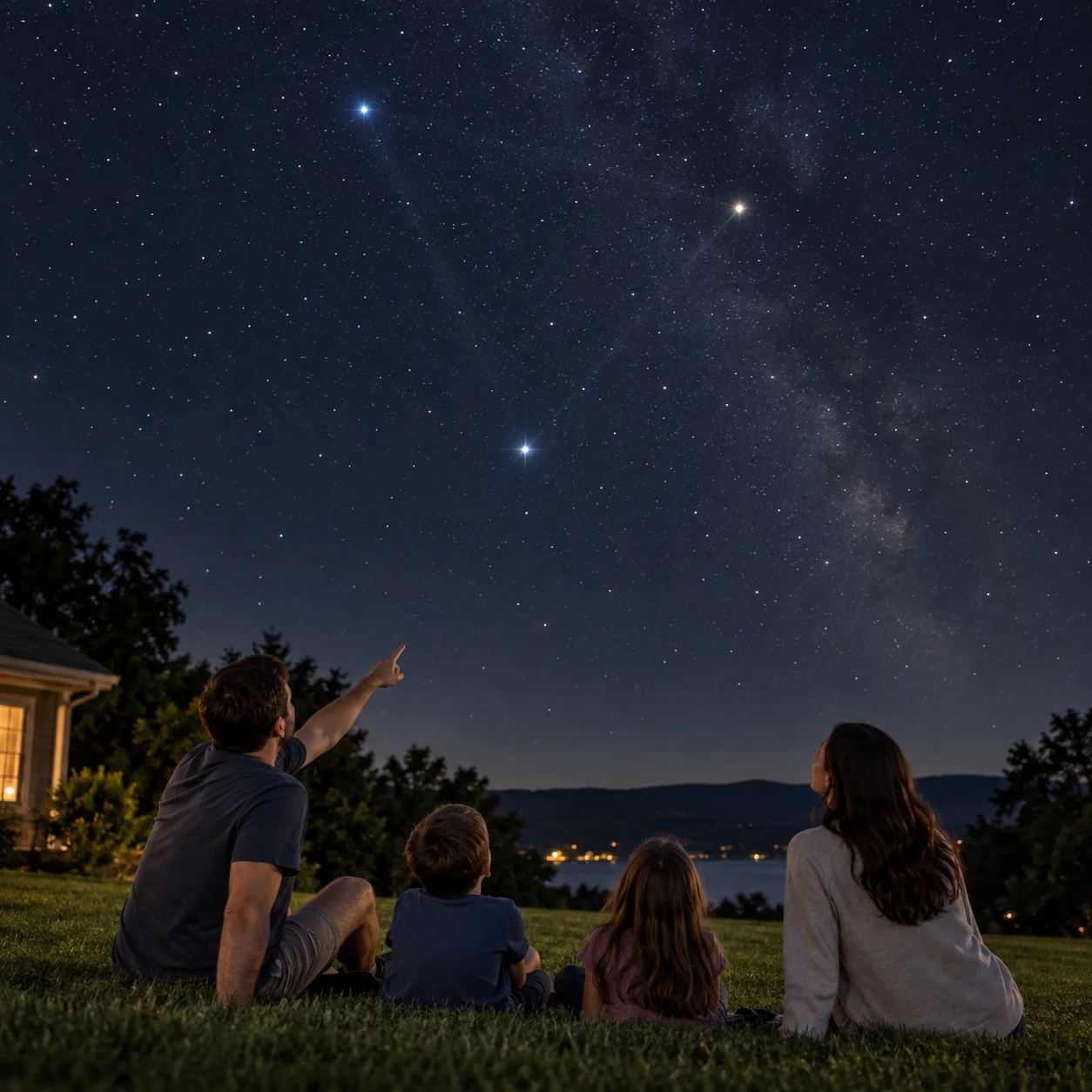
The Summer Triangle is valuable precisely because its three bright corners remain useful when a detailed star map feels overwhelming. If one triangle corner seems missing from a city site, use the chart to ask whether it is behind a roof, low in haze or merely faint against glare. Returning at a slightly different hour can change the geometry. Do not add a star to the sketch just to make the triangle complete. A partial observation is still useful evidence.
Continue observing
- Use Orion’s Belt to Find the Sword and Its Fuzzy Nebula
- Use Binoculars to Explore Orion’s Sword in Winter